Bank of England convenes UK banks for briefing on cyber risks of Anthropic's Mythos model
The Bank of England is preparing a separate briefing for the largest banks, insurers and exchanges on Anthropic's Claude Mythos Preview. Regulators fear the model can autonomously find and exploit vulnerabilities in operating systems and browsers. Anthropic has already restricted access to the system. Among the early partners in its defensive program, Project Glasswing, are AWS, Google, Microsoft and JPMorgan Chase.
AI-processed from TNW; edited by Hamidun News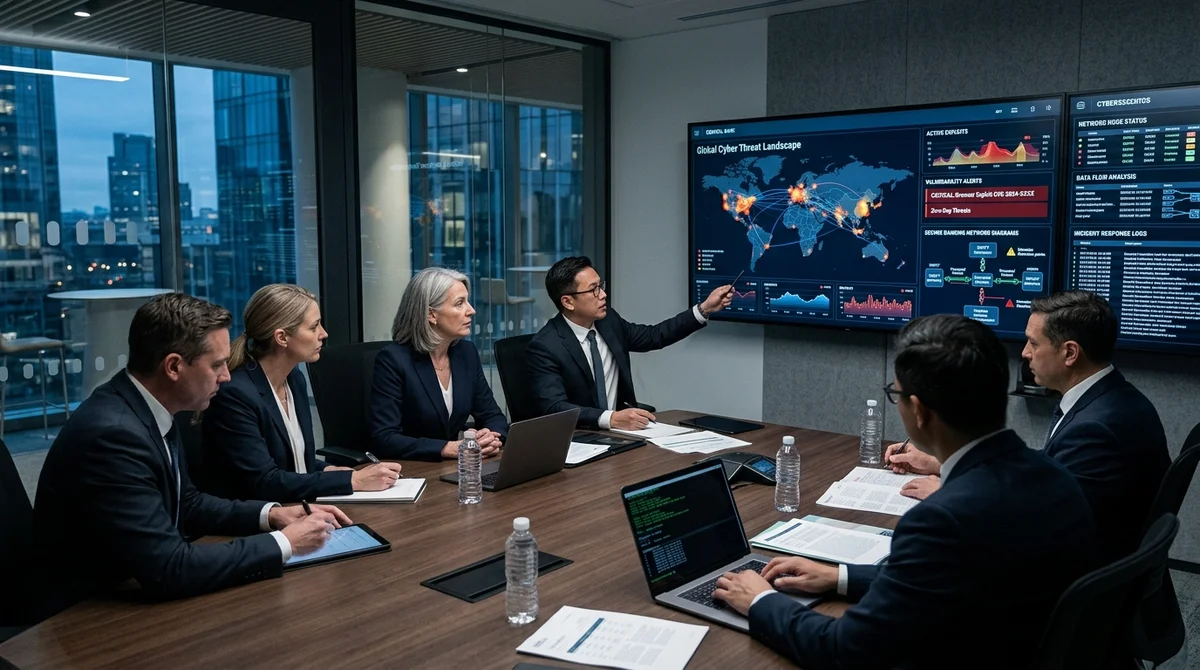
On April 16, the Bank of England raised Claude Mythos Preview to the level of a systemic risk for the entire financial sector. Regulators are preparing a separate briefing for the largest banks, insurers and exchanges after claims that Anthropic's new model can autonomously find and exploit vulnerabilities in key software, from operating systems to browsers.
The discussions take place within the Cross Market Operational Resilience Group (CMORG), a forum that coordinates the resilience of UK financial infrastructure. Its members include the heads of the country's eight largest banks, representatives of four infrastructure operators and two insurance groups, as well as the Treasury, the Bank of England, the FCA and the National Cyber Security Centre. The fact that the topic has been raised at this level shows that the problem is being treated not as just another IT story, but as a question of the stability of payments, trading venues and critical services.
The trigger is Claude Mythos Preview, an Anthropic model that has not been publicly released and to which the company gives access only to a limited circle of partners. According to Anthropic, the model has already helped identify thousands of previously unknown high-severity vulnerabilities, including bugs in every major operating system and every major browser. The company also says the model can not only find weak points but also build exploitation chains with almost no human involvement. One example is the discovery of a way for a malicious website to access data from another site, including banking data.
What worries regulators in particular is that this is not a lab demonstration. Anthropic stated explicitly that it is not releasing Mythos Preview widely precisely because of its cyber capabilities. Among the disclosed examples is a 27-year-old vulnerability in OpenBSD, along with other bugs that neither experts nor automated tests had noticed for years. For banks this is especially sensitive: a significant part of the industry still relies on a complex, heterogeneous legacy stack, where even a single new technique for finding exploits can sharply shorten the time between discovering a vulnerability and a real attack.
The international reaction also points to how serious the situation is. Before these British meetings, emergency discussions had already taken place in the US and Canada. In Washington, the topic was raised by the US Treasury and the Federal Reserve together with the heads of the largest systemically important banks. For regulators, this is a signal that frontier models are starting to affect not only developer productivity but also the profile of systemic risk: if such tools reach attackers, or simply outpace the readiness of defensive teams, the most important nodes will be the most exposed: payments, clearing, trading infrastructure and banking web services.
In parallel, Anthropic has launched Project Glasswing, a program of early, controlled access for defensive teams. Named partners include AWS, Apple, Google, Microsoft, Nvidia, Cisco and JPMorgan Chase. The company promises up to $100 million in credits for using Mythos and another $4 million in donations to organizations working on open-source security. The logic is simple: give defenders a head start so they can find and close vulnerabilities before similar capabilities become widespread among competitors or leak into the attackers' camp.
The main takeaway for the financial sector is that AI risk here has stopped being an abstract topic about the future. If Anthropic's claims are confirmed even in part in real-world practice, banks will have to speed up vulnerability inventories, rethink their patching processes and learn to use the same kind of models for defense. Otherwise, the advantage in speed and scale could, for the first time, pass not to security teams but to those who automate the attack.
- Nov 2, 2026Bun creator uses Claude Code to port 750K lines from Zig to Rust in 11 days
- Nov 2, 2026mcp-linter finds 18 undescribed parameters in Anthropic's filesystem server
- Nov 2, 2026The Verge reviewer builds a $50 Meta Muse Charm alternative with Claude Code
- Nov 2, 20268 Skills for video in Claude Code: from 244 pixel effects to rough-cut editing
Test Frontier LLMs & Autonomous Agents in One Workspace
Run Claude Opus 5.5, GPT-6, Gemini 3.1, and DeepSeek side-by-side in Nomad AI (nomadnet.ai) — unified model routing, deep research, and multimodal workflows under one subscription.
The AI world, distilled — once a week
Seven stories that actually mattered, hand-picked. No noise, no reposts, no press releases.
Done! Check your inbox for a confirmation.