Musk tells court his OpenAI lawsuit is about "stealing a charity"
Elon Musk testified under oath for the first time in his lawsuit against OpenAI and its co-founders. In federal court in Oakland, he said the dispute is not about him personally but about whether an organization's charitable mission can be "stolen." The case now looks less like another round of industry sparring and more like a test for the structure of AI companies as a whole.
AI-processed from TNW; edited by Hamidun News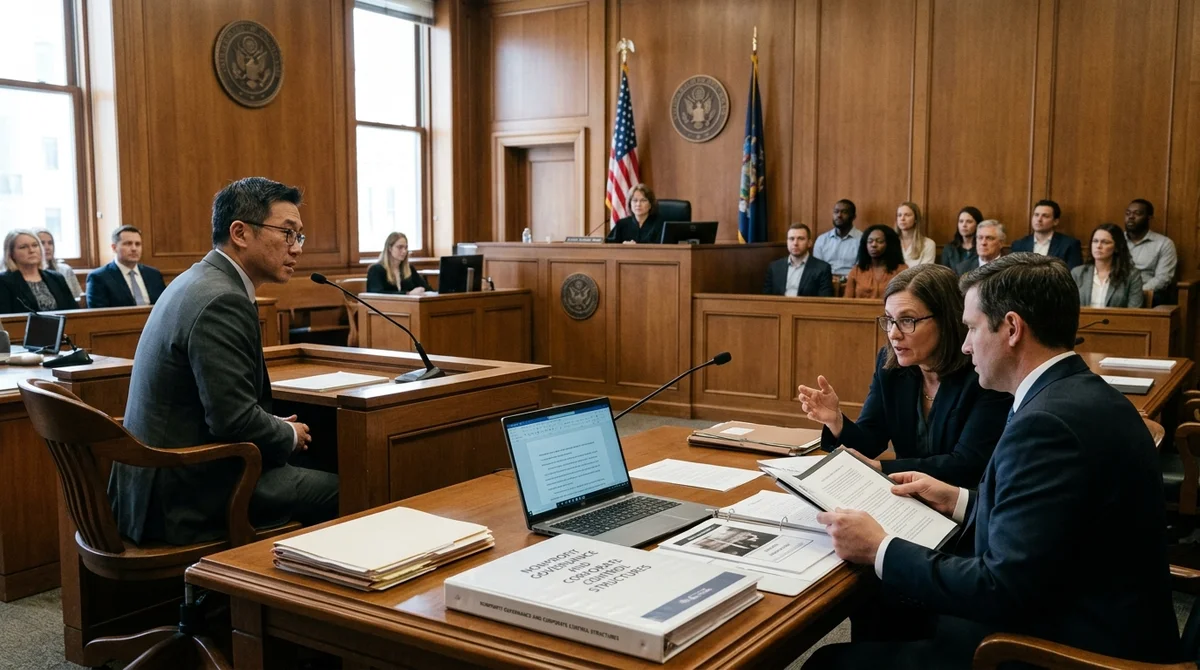
Elon Musk testified under oath for the first time in his lawsuit against OpenAI and its co-founders, saying the dispute is not about personal interests but about the fate of the company's charitable mission. His appearance in federal court in Oakland moves the conflict from a loud public quarrel into a legal fight that could affect the rules of the game for major AI labs.
How Musk explained the lawsuit
On Tuesday, Musk appeared before a federal jury in Oakland, California, in the case he filed back in 2024. It is his first sworn testimony in this suit, which is why what he says in the courtroom carries noticeably more weight than his usual posts, interviews or social media comments. Before the jurors, he tried to set the simplest possible frame: by his account, this is not about personal enmity or a struggle for influence, but about a violation of the organization's original purpose.
"You can't steal a charity — that is my position."
The wording matters in itself. Musk deliberately presents the suit not as a corporate conflict between powerful figures in the AI market but as a dispute over principle. If the court takes that logic seriously, the discussion will move away from the parties' personal motives to the question of what exactly OpenAI promised at the start, who had the right to change course, and whether such a transformation can be considered a breach of the original mission.
Why the case is bigger than Musk
Even in brief, it is clear that this trial reaches far beyond Musk's own biography. At stake is not only the relationship between one of the co-founders and the company he later began to criticize, but a broader question: how to treat organizations that started with a public or charitable logic and then ended up at the center of a commercial race for AI leadership. That is why his words about the "theft of a charity" sound like an attempt to set a precedent.
If the court treats this argument as legally significant, the consequences may reach beyond OpenAI. Other research labs, foundations and hybrid structures will also have to look more carefully at how they word their mission, restructure governance and explain the shift from a public agenda to a commercial model. For the industry, this is no longer only a matter of reputation but of corporate structure.
- who has the right to change an organization's original mission;
- how courts may interpret promises made at the start of a project;
- where the line lies between a company's growth and abandoning its original commitments;
- whether such disputes could become a guide for future AI companies.
What the jurors heard
Sworn testimony also changes the tone of the story. In the public arena, the Musk-OpenAI conflict was often seen as another episode in the fight for influence in the AI industry, where loud statements extend a competitive war. In court, that rhetoric no longer works on its own: every claim becomes part of a legal construct that lawyers, the judge and the jurors will test. That makes the current hearing more important than ordinary media sniping.
For OpenAI, this means the case is shifting ever more from the reputational plane to the institutional one. If the jury finds Musk's arguments convincing, a dispute about the company's past could become a discussion of acceptable limits for the entire industry. Even without an immediate resolution, the very fact of such proceedings draws more attention to how AI organizations structure governance, promises and control over strategy. In effect, the court is testing how to document such U-turns.
What this means
The story of Musk's testimony matters not only for OpenAI and his personal suit. It shows that in the AI industry, courts are beginning to examine not just technology and competition but also the question of who owns a company's mission when big money and influence are at stake. For the market, this is a signal: in the coming years, the legal architecture of AI projects is becoming no less important than the models themselves.
- Nov 2, 2026Meta's Muse assistant keeps dossiers on loved ones and gets root on Ubuntu by default
- Nov 1, 2026Local models lose to Opus and Codex: 0.21 on a MacBook versus 1.00 for Codex
- Nov 1, 2026Kimi scores 96.2% on a 1C database analytics test and emerges as a fallback if Claude access is blocked
- Nov 1, 2026OpenAI Rewrites GPT Behavior Rules: Five Values and a Chain of Command
Key Questions Answered
How Musk explained the lawsuit?
On Tuesday, Musk appeared before a federal jury in Oakland, California, in the case he filed back in 2024. It is his first sworn testimony in this suit, which is why what he says in the courtroom carries noticeably more weight than his usual posts, interviews or social media comments. Before the jurors, he tried to set the simplest possible frame: by his account, this is not about personal enmity or a struggle for influence, but about a violation of the organization's original purpose. "You can't steal a charity — that is my position." The wording matters in itself. Musk de
Why the case is bigger than Musk?
Even in brief, it is clear that this trial reaches far beyond Musk's own biography. At stake is not only the relationship between one of the co-founders and the company he later began to criticize, but a broader question: how to treat organizations that started with a public or charitable logic and then ended up at the center of a commercial race for AI leadership. That is why his words about the "theft of a charity" sound like an attempt to set a precedent. If the court treats this argument as legally significant, the consequences may reach beyond OpenAI. Other research la
What the jurors heard?
Sworn testimony also changes the tone of the story. In the public arena, the Musk-OpenAI conflict was often seen as another episode in the fight for influence in the AI industry, where loud statements extend a competitive war. In court, that rhetoric no longer works on its own: every claim becomes part of a legal construct that lawyers, the judge and the jurors will test. That makes the current hearing more important than ordinary media sniping. For OpenAI, this means the case is shifting ever more from the reputational plane to the institutional one. If the jury finds Musk
Test Frontier LLMs & Autonomous Agents in One Workspace
Run Claude Opus 5.5, GPT-6, Gemini 3.1, and DeepSeek side-by-side in Nomad AI (nomadnet.ai) — unified model routing, deep research, and multimodal workflows under one subscription.
The AI world, distilled — once a week
Seven stories that actually mattered, hand-picked. No noise, no reposts, no press releases.
Done! Check your inbox for a confirmation.