Google agrees to let the Pentagon use its AI models for any lawful purpose
Google has reportedly signed a classified agreement with the Pentagon under which the US military can use its AI models "for any lawful government purpose." The news came almost immediately after employees sent a letter asking leadership to block such cooperation over the risk of "inhumane" use. If the reports are confirmed, Google will firmly join the ranks of the main US defense AI contractors.
AI-processed from The Verge; edited by Hamidun News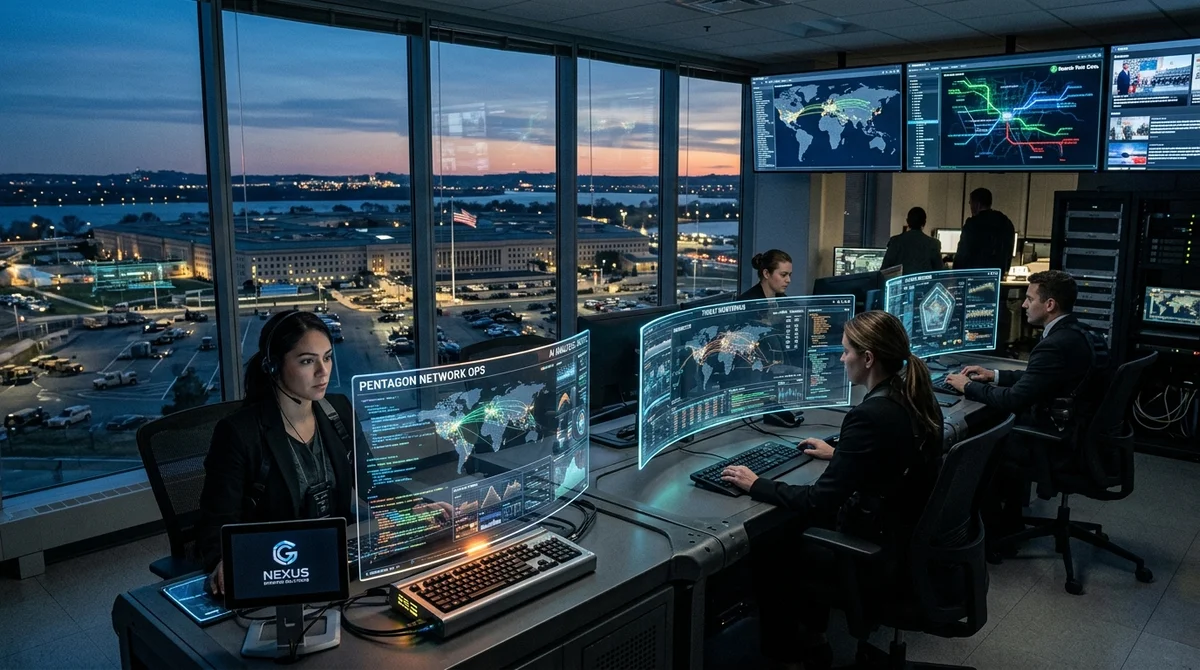
Google has signed a classified agreement with the Pentagon, according to The Information, that allows the military to use its AI models "for any lawful government purpose." The news came almost immediately after some employees demanded that Sundar Pichai block military use of these systems.
What the deal includes
This is not a public contract with a transparent list of services, but a closed agreement with the US Department of Defense. The wording "any lawful government purpose" is extremely broad: it leaves the Pentagon room for a wide range of scenarios, from analytics and document workflows to intelligence work, planning and internal military processes. Because the deal is classified, it is almost impossible to tell which Google models will be used, what restrictions are written into it, or where the line of acceptable use lies.
For Google, it is also a strategic reversal. The company long tried to stay cautious on military AI projects after the Project Maven scandal, but the market has changed. The largest labs are moving into the defense sector more and more, because it offers big budgets, long contracts and direct access to tasks where artificial intelligence can become infrastructure rather than just an office tool. In effect, Google is drawing less of a line between the civilian and government markets, and increasingly treats its models as a platform for any large customer.
Why employees are arguing
The report of the deal came less than a day after Google employees urged the CEO to block the company's AI from being used by the Pentagon. Their main argument is the high risk that the models will be used not for routine automation but in scenarios that lead to severe consequences for people. The internal conflict is not only ethical but also reputational: promises of "responsible AI" start to look weaker when the details of the cooperation are hidden.
"for any lawful government purpose"
The problem lies in exactly this formula. In contracts like this, legality does not answer the question of how humane, controllable or verifiable a system is. For critics that is not enough: they fear it could cover tools for target analysis, intelligence processing, selecting objects of surveillance and other sensitive operations, where a model error or weak operator oversight carries a real cost. That is why the dispute inside Google is no longer about wording in press releases, but about the real limits of participation in military programs.
Who already works with the Pentagon
If the information is confirmed, Google will join other AI companies that have already signed closed deals with the US government. For the market this is an important signal: defense cooperation is becoming the new norm for the biggest players, not the exception. Not long ago such arrangements looked like one-offs, but now a whole class of suppliers is emerging that is ready to adapt frontier models to government tasks. This changes both the rules of competition and investor expectations.
- OpenAI has already signed a separate agreement with the Pentagon for AI services.
- xAI has also won a defense contract, which shows the government's readiness to work with more than one supplier.
- Anthropic was previously discussed as a possible partner but, according to earlier reports, was excluded after refusing to remove internal restrictions the Defense Department wanted lifted.
- Competition is shifting from consumer chatbots to closed government deployments.
- For model developers, this means not only revenue but also pressure on their own safety principles.
Amid this race, Google risks a double effect. On one hand, the company strengthens its position against OpenAI, Microsoft and xAI in the contest for large government budgets. On the other, the broader the contract wording and the fewer the public explanations, the harder it will be to keep the trust of employees, researchers and users who expect clear red lines for military use of AI. The more actively Big Tech moves into defense, the harder it is to keep a neutral image.
What this means
The AI market is quickly entering a phase in which the key customers are not only corporations but also security agencies. Google's deal with the Pentagon shows that the debate over military use of models is no longer theoretical: it now affects the business of the largest labs and the restrictions they are actually willing to defend. For the industry the signal is that the question is no longer whether the state will use such systems, but who can control them, and on what terms.
- Nov 2, 2026Karpathy builds a YouTube clone with 6454 videos from Hacker News recommendations in two hours
- Nov 2, 2026Karpathy used Claude to build HackerTube from 6,454 videos recommended on Hacker News
- Nov 2, 2026Anthropic needs to grow revenue 32% a year to cover $850 billion in contracts
- Nov 2, 2026Bun creator uses Claude Code to port 750K lines from Zig to Rust in 11 days
Key Questions Answered
What the deal includes?
This is not a public contract with a transparent list of services, but a closed agreement with the US Department of Defense. The wording "any lawful government purpose" is extremely broad: it leaves the Pentagon room for a wide range of scenarios, from analytics and document workflows to intelligence work, planning and internal military processes. Because the deal is classified, it is almost impossible to tell which Google models will be used, what restrictions are written into it, or where the line of acceptable use lies. For Google, it is also a strategic reversal. The co
Why employees are arguing?
The report of the deal came less than a day after Google employees urged the CEO to block the company's AI from being used by the Pentagon. Their main argument is the high risk that the models will be used not for routine automation but in scenarios that lead to severe consequences for people. The internal conflict is not only ethical but also reputational: promises of "responsible AI" start to look weaker when the details of the cooperation are hidden. "for any lawful government purpose" The problem lies in exactly this formula. In contracts like this, legality does not an
Who already works with the Pentagon?
If the information is confirmed, Google will join other AI companies that have already signed closed deals with the US government. For the market this is an important signal: defense cooperation is becoming the new norm for the biggest players, not the exception. Not long ago such arrangements looked like one-offs, but now a whole class of suppliers is emerging that is ready to adapt frontier models to government tasks. This changes both the rules of competition and investor expectations. OpenAI has already signed a separate agreement with the Pentagon for AI services. xAI
Ship AI Faster with Founders, Engineers & Weekly Architecture Reviews
Inside Vibe Club (hamidun.com/club) — weekly live masterminds with Zhemal Khamidun, Tech Radar, full LMS access, and 370+ production Claude Code skills.
The AI world, distilled — once a week
Seven stories that actually mattered, hand-picked. No noise, no reposts, no press releases.
Done! Check your inbox for a confirmation.