Google lets the Pentagon use its AI models for any lawful purpose
Google has signed an agreement with the Pentagon that allows its AI models to be used in classified work and for any lawful government task. The company wrote in restrictions: the technology must not be used for mass surveillance inside the US or for autonomous target selection without human oversight. The deal supplements an existing contract and cements Google's place among the Pentagon's key AI contractors.
AI-processed from 3DNews AI; edited by Hamidun News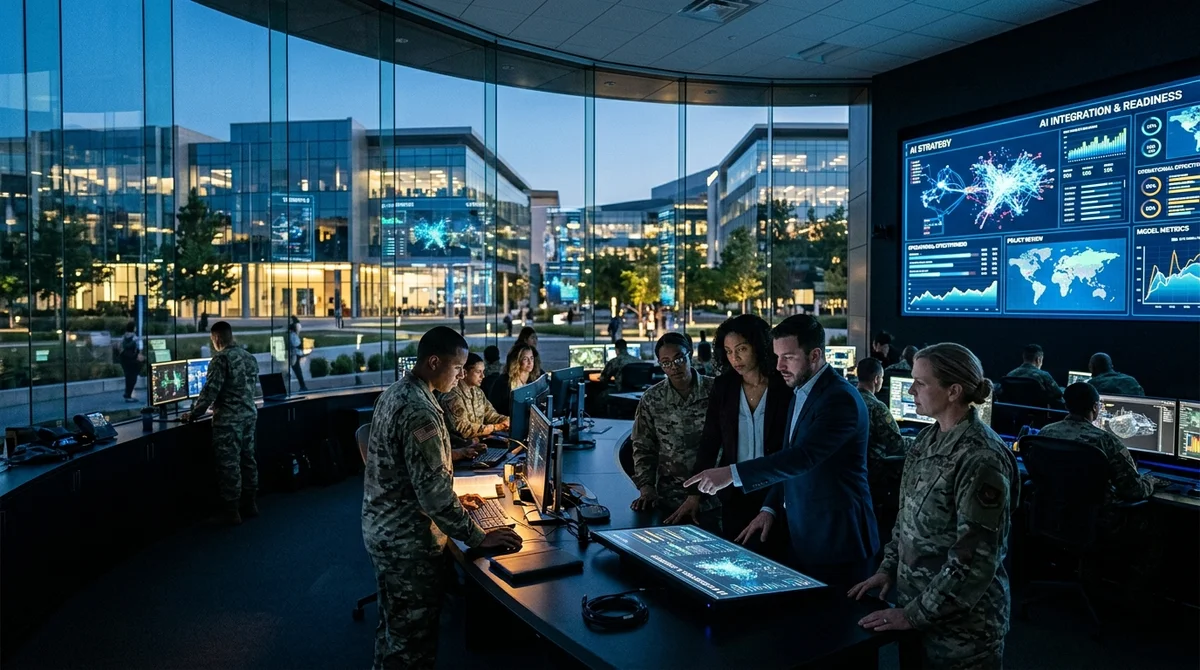
Google has signed a new agreement with the Pentagon that lets the US military use the company's AI models for any purpose permitted by law, including work in classified environments. The deal puts Google among the key suppliers of military AI, where OpenAI, Microsoft and xAI are already established.
What the contract covers
The new agreement allows the US Department of Defense to use Google's technology for any government task considered lawful. That goes beyond standard analytics or internal services to closed systems that process sensitive data.
Google representatives say this is not a separate experimental launch but an addition to an existing contract with the agency. In other words, the company is not merely entering the defense sector through a pilot project; it is expanding an existing relationship and cementing its presence in one of the most sensitive segments of government procurement.
In practical terms, the Pentagon can turn to Google not only for access to the models but also for tuning filters, safety parameters and operating restrictions to fit its own scenarios. For military customers this is critical: the standard guardrails of consumer AI services often get in the way of using them in classified or tightly regulated environments. Google thus becomes another supplier the Pentagon keeps in the same pool as other major players. According to the publication, last year similar agreements with individual contractors could reach up to $200 million per company.
Where the limits lie
The deal came amid internal pressure on Google. Shortly before it, several hundred employees backed a petition demanding that the company's AI not be tied to Pentagon military projects. Management chose a more pragmatic path: rather than walking away from the contract, it wrote formal restrictions on the system's use into it.
This looks like an attempt to keep the defense contract while showing that Google still has its own red lines, though fairly narrow ones compared with what the customer can actually do.
"The system is not intended for domestic mass surveillance or
autonomous weapons without human oversight."
The key caveat is that these restrictions do not give Google the right to block lawful use of its AI by the US government at the level of military operations. Put differently, the company can write in a ban on domestic mass surveillance or fully autonomous target selection without human involvement, but it cannot stop the model from being used if the government considers the scenario lawful and consistent with the contract.
For the market this is an important signal: even when a developer tries to build in guardrails, actual control in defense AI contracts is shifting ever more toward the government customer.
What is changing in the market
The Google case shows that the US military AI market is quickly turning from a contested zone into a full-fledged line of business for the largest tech companies. With OpenAI, Microsoft and xAI already embedded in the US defense apparatus, turning down such contracts is becoming the exception rather than the rule.
Against this backdrop, the conflict around Anthropic stands out: its tougher stance on restrictions did not change the Pentagon's approach, and only pushed the agency to work more actively with more accommodating suppliers. For Google this means both new revenue and deeper integration into US government processes.
- The Pentagon gains another major AI supplier for classified and sensitive tasks.
- Google strengthens its presence in the public sector and extends its influence beyond the commercial cloud.
- Tuning filters and safety parameters is becoming part of military contracts, not just product policy.
- Employee pressure on management affects the wording but does not stop strategic deals.
For Google itself this is also a reputational test. The company has long tried to balance the image of a responsible developer against the wish not to be shut out of the most lucrative and politically significant segments of the AI market. The new agreement shows that, when choosing between ethical distance and access to government money, big tech companies increasingly choose the latter, adding a minimal layer of legal restrictions on top.
That is why the news matters beyond the defense sector, to the whole debate over who actually controls how large models are used in government systems.
What this means
Google is no longer a bystander in the military AI race and becomes a direct Pentagon contractor for lawful tasks, including classified ones. For the industry the implication is simple: cooperation between large AI companies and security agencies is becoming the norm, and the dispute is no longer about the partnership itself but about where exactly the line of what is acceptable lies.
- Nov 2, 2026Karpathy builds a YouTube clone with 6454 videos from Hacker News recommendations in two hours
- Nov 2, 2026Karpathy used Claude to build HackerTube from 6,454 videos recommended on Hacker News
- Nov 2, 2026Anthropic needs to grow revenue 32% a year to cover $850 billion in contracts
- Nov 2, 2026Bun creator uses Claude Code to port 750K lines from Zig to Rust in 11 days
Key Questions Answered
What the contract covers?
The new agreement allows the US Department of Defense to use Google's technology for any government task considered lawful. That goes beyond standard analytics or internal services to closed systems that process sensitive data. Google representatives say this is not a separate experimental launch but an addition to an existing contract with the agency. In other words, the company is not merely entering the defense sector through a pilot project; it is expanding an existing relationship and cementing its presence in one of the most sensitive segments of government procuremen
Where the limits lie?
The deal came amid internal pressure on Google. Shortly before it, several hundred employees backed a petition demanding that the company's AI not be tied to Pentagon military projects. Management chose a more pragmatic path: rather than walking away from the contract, it wrote formal restrictions on the system's use into it. This looks like an attempt to keep the defense contract while showing that Google still has its own red lines, though fairly narrow ones compared with what the customer can actually do. "The system is not intended for domestic mass surveillance or auto
What is changing in the market?
The Google case shows that the US military AI market is quickly turning from a contested zone into a full-fledged line of business for the largest tech companies. With OpenAI, Microsoft and xAI already embedded in the US defense apparatus, turning down such contracts is becoming the exception rather than the rule. Against this backdrop, the conflict around Anthropic stands out: its tougher stance on restrictions did not change the Pentagon's approach, and only pushed the agency to work more actively with more accommodating suppliers. For Google this means both new revenue a
Test Frontier LLMs & Autonomous Agents in One Workspace
Run Claude Opus 5.5, GPT-6, Gemini 3.1, and DeepSeek side-by-side in Nomad AI (nomadnet.ai) — unified model routing, deep research, and multimodal workflows under one subscription.
The AI world, distilled — once a week
Seven stories that actually mattered, hand-picked. No noise, no reposts, no press releases.
Done! Check your inbox for a confirmation.