DeepSeek V4 Drives ByteDance and Alibaba Demand for Huawei Ascend 950
DeepSeek V4, tuned for Huawei Ascend 950, has sharply boosted interest in Chinese AI accelerators. According to industry sources, ByteDance, Tencent and Alibaba are already submitting new chip orders. For Huawei, this is not just a sales bump. If the trend holds, a local pairing of model and hardware could soon become the standard for large AI deployments inside China.
AI-processed from 3DNews AI; edited by Hamidun News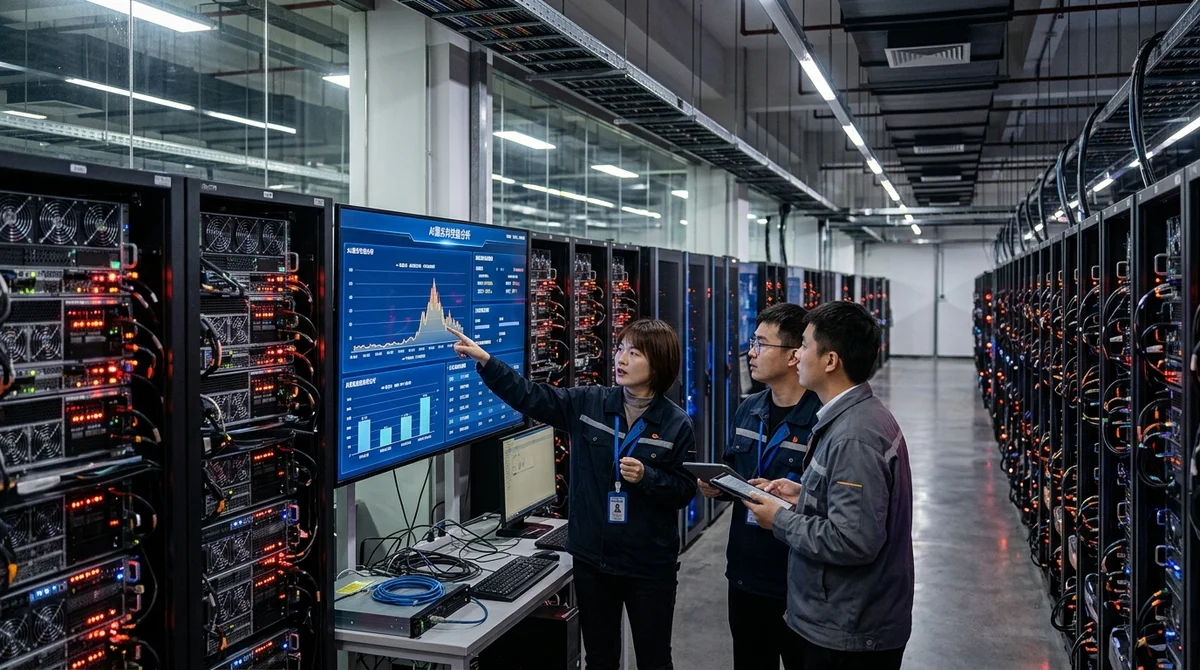
The release of DeepSeek V4, built for Huawei Ascend 950 accelerators, has sharply shifted sentiment in China's AI market. Major internet companies have started requesting new batches of chips more actively, hoping to expand their own capacity for training and running models faster.
Why demand has jumped
The main reason for the surge is simple: DeepSeek V4 was optimized for Huawei hardware from the start, which lowers the barriers for anyone who wants to deploy it inside China without relying on American suppliers. When a major model works well with a local hardware platform, it is more than a technical story for the market. It signals that the ecosystem has matured enough for companies to plan purchases not at the level of experiments, but at the level of full-scale infrastructure.
Customers care not only about the model itself but also about a predictable supply chain. When software and chips are better matched, adaptation costs fall, deployment speeds up, and there is a chance to get AI services into production faster. Amid export restrictions and the scramble for compute, this scenario looks especially attractive: businesses need not the loudest announcement but a working stack they can scale here and now.
Who is placing orders
According to available information, ByteDance, Tencent and Alibaba are already approaching Huawei with new requests. The interest of the largest internet groups matters in itself: such companies rarely bet on a platform unless they see real potential in performance, availability and long-term support. This apparently involves not isolated tests but an attempt to claim capacity in advance, before demand rises further.
Even if some of the requests are still preliminary, the pace of inquiries shows that the market fears a shortage. For large platforms, delay is expensive: if competitors snap up the accelerators they need, launch timelines for new models, recommendation systems and AI features start to slip. So interest in Ascend 950 can be read not only as a reaction to one release but also as an attempt to lock in access to compute ahead of everyone else.
- ByteDance — for AI services and internal workloads
- Tencent — for cloud and consumer products
- Alibaba — for its own infrastructure and model platforms
- Huawei — as the supplier around which a local supply chain could form
Why it matters
If demand for Ascend 950 is really growing at this pace, it changes the balance of power in China's accelerator market. Until now, many companies depended on foreign solutions or kept them as a performance benchmark. The emphasis is now shifting to a scenario in which value comes not from an individual chip but from the combination of model, server infrastructure, deployment tools and access to supply.
For Huawei, this is a chance to establish itself not only as a hardware vendor but as the center of its own AI ecosystem.
It is a practical shift for developers and enterprise customers too. The more large clients adopt the same platform, the faster optimizations, tools and service teams appear around it. That lowers the risk for later buyers: they are no longer entering a raw system but a market where the first players are effectively paying for the accelerated maturation of the whole technology base. This is how a single model release can become a catalyst for hardware demand.
What it means
DeepSeek V4 has shown that a model's success is now measured not only by answer quality but also by the hardware it actually runs on. If the interest from ByteDance, Tencent and Alibaba turns into large contracts, Huawei will gain a strong argument in the race for China's AI infrastructure, and the market will get another example of software directly driving chip sales.
- Nov 2, 2026DeepSeek open-sources Super-agent prototype: p95 task completion time of 15.7 minutes vs. 29.5
- Nov 1, 202616 models tested on 7 search tools: Exa averaged 10.5 out of 14, SearXNG about 3
- Nov 1, 2026MoneyGate safety layer blocked all 42 fraudulent requests to local AI models
- Oct 31, 2026DeepSeek-V4.1-Flash cuts HBM KV cache to 890 bytes per token, down from 3514
Key Questions Answered
Why demand has jumped?
The main reason for the surge is simple: DeepSeek V4 was optimized for Huawei hardware from the start, which lowers the barriers for anyone who wants to deploy it inside China without relying on American suppliers. When a major model works well with a local hardware platform, it is more than a technical story for the market. It signals that the ecosystem has matured enough for companies to plan purchases not at the level of experiments, but at the level of full-scale infrastructure. Customers care not only about the model itself but also about a predictable supply chain. Wh
Who is placing orders?
According to available information, ByteDance, Tencent and Alibaba are already approaching Huawei with new requests. The interest of the largest internet groups matters in itself: such companies rarely bet on a platform unless they see real potential in performance, availability and long-term support. This apparently involves not isolated tests but an attempt to claim capacity in advance, before demand rises further. Even if some of the requests are still preliminary, the pace of inquiries shows that the market fears a shortage. For large platforms, delay is expensive: if c
Why it matters?
If demand for Ascend 950 is really growing at this pace, it changes the balance of power in China's accelerator market. Until now, many companies depended on foreign solutions or kept them as a performance benchmark. The emphasis is now shifting to a scenario in which value comes not from an individual chip but from the combination of model, server infrastructure, deployment tools and access to supply. For Huawei, this is a chance to establish itself not only as a hardware vendor but as the center of its own AI ecosystem. It is a practical shift for developers and enterpris
Test Frontier LLMs & Autonomous Agents in One Workspace
Run Claude Opus 5.5, GPT-6, Gemini 3.1, and DeepSeek side-by-side in Nomad AI (nomadnet.ai) — unified model routing, deep research, and multimodal workflows under one subscription.
The AI world, distilled — once a week
Seven stories that actually mattered, hand-picked. No noise, no reposts, no press releases.
Done! Check your inbox for a confirmation.