OpenAI Is Discussing Fusion Power Purchases for Future AI Models and Data Centers
OpenAI is in talks to buy tens of gigawatts of fusion power from a startup in which Sam Altman has invested. Commercial fusion does not exist yet, but the talks alone show a new scale in the AI race: market leaders are thinking beyond models and chips to where they will get electricity for future data centers, API services and heavier computing. If a deal ever reaches delivery, it would be a rare case of an AI company locking up a huge volume of still-noncommercial energy in advance.
AI-processed from CNews AI; edited by Hamidun News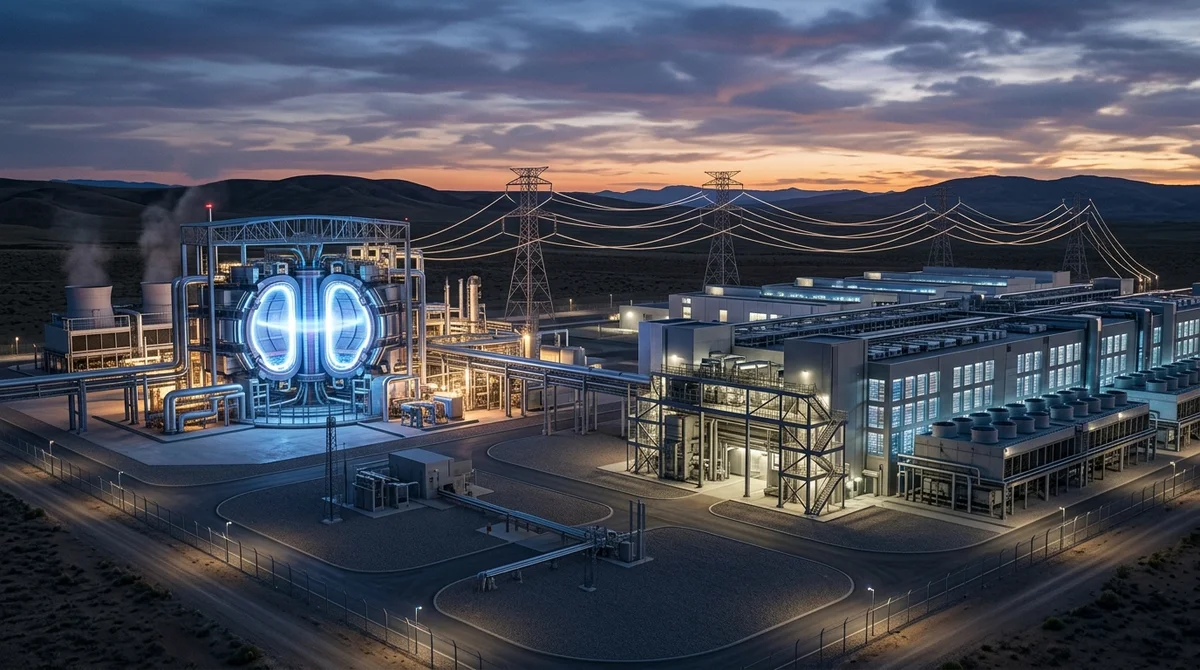
OpenAI is discussing the purchase of fusion power to run computing for its future AI models. If the deal ever reaches execution, it would be a rare case of an AI company trying to lock up a huge volume of still-noncommercial energy in advance.
Why OpenAI needs energy
The story looks unusual even by the standards of the AI infrastructure race. OpenAI is negotiating with a startup in which its CEO Sam Altman has made a notable investment, to buy tens of gigawatts of fusion energy. The scale matters as much as the technology: this is not a local contract for a single data center but a potential resource for future generations of models, which will need ever more expensive training and serving.
The biggest players in the AI market are already running into not only a shortage of chips but also the limits of the power sector. Building new compute clusters without guaranteed access to electricity is getting harder. OpenAI's interest can therefore be read as a bet in two directions at once: on sharp growth in its own appetite for compute, and on finding an energy source that could, in theory, meet that demand over the long term.
AI energy use also grows for reasons beyond training new models. Running services day to day takes enormous resources too: chat responses, image generation, video, voice features, enterprise APIs. The more users and the more complex the models, the more expensive each additional layer of infrastructure becomes. Against this backdrop, energy stops being a side topic for tech companies and moves to the center of business strategy.
Why this is still just an idea
Fusion has long been seen as one of the most desirable energy scenarios: lots of power, fewer emissions and less dependence on conventional fuel. The problem is that the technology has no commercial maturity yet. That is why the news matters not as a sign that reactors for AI are about to launch, but as a signal of which scenarios the largest tech companies are taking seriously.
Even if the talks advance, a huge distance separates discussion from actual delivery. It is not enough to confirm that the technology works in laboratory or pilot conditions; it has to become a stable industrial system with a predictable price, reliability and clear timelines. For OpenAI, this is for now more an option on the future than a ready energy foundation for today's products.
The startup's tie to Altman is a separate layer of the story. When the head of an AI company invests in an energy project that could potentially supply that same AI infrastructure, it shows how closely the interests of technology, capital and energy are now intertwined. Even without a final deal, the talks themselves underline that AI executives are thinking not only about model quality but about where to get electricity for the next stage of growth.
What the scale says
The phrase "tens of gigawatts" by itself shows how quickly AI companies are starting to think in categories that used to belong to governments, energy giants and heavy industry.
- AI models need ever more computing power for training and operation
- Data centers, along with electricity supply, are becoming the main constraint on growth
- Major players are starting to reserve future energy resources in advance
- Fusion is being considered not as abstract science but as a possible part of AI infrastructure
- An energy strategy is becoming as much an asset for AI companies as models and chips
In practice, this does not yet mean AI will soon switch to fusion. But the very existence of such talks shows a change of scale: AI developers are thinking not only about models, chips and data but about the basic physical infrastructure without which the next leap in the quality and size of systems may simply not happen.
If the main question used to be which lab would assemble the best stack of data, engineers and accelerators, a new one is now being added: who can secure energy for years ahead. That is why such news matters even at a very early stage. It shows where the next front of AI competition lies.
What this means
The AI market depends more and more on energy, so the contest between the leaders will be fought not only over the best models but over access to electricity. OpenAI's fusion talks show that the future of AI is starting to be planned at the level of power plants, not just data centers.
- Nov 2, 2026Arca gives AI agents finance tasks lasting up to 10 days, but leaves the trades to humans
- Nov 2, 2026Meta's Muse assistant keeps dossiers on loved ones and gets root on Ubuntu by default
- Nov 1, 2026Local models lose to Opus and Codex: 0.21 on a MacBook versus 1.00 for Codex
- Nov 1, 2026Kimi scores 96.2% on a 1C database analytics test and emerges as a fallback if Claude access is blocked
Key Questions Answered
Why OpenAI needs energy?
The story looks unusual even by the standards of the AI infrastructure race. OpenAI is negotiating with a startup in which its CEO Sam Altman has made a notable investment, to buy tens of gigawatts of fusion energy. The scale matters as much as the technology: this is not a local contract for a single data center but a potential resource for future generations of models, which will need ever more expensive training and serving. The biggest players in the AI market are already running into not only a shortage of chips but also the limits of the power sector. Building new com
Why this is still just an idea?
Fusion has long been seen as one of the most desirable energy scenarios: lots of power, fewer emissions and less dependence on conventional fuel. The problem is that the technology has no commercial maturity yet. That is why the news matters not as a sign that reactors for AI are about to launch, but as a signal of which scenarios the largest tech companies are taking seriously. Even if the talks advance, a huge distance separates discussion from actual delivery. It is not enough to confirm that the technology works in laboratory or pilot conditions; it has to become a stab
What the scale says?
The phrase "tens of gigawatts" by itself shows how quickly AI companies are starting to think in categories that used to belong to governments, energy giants and heavy industry. AI models need ever more computing power for training and operation Data centers, along with electricity supply, are becoming the main constraint on growth Major players are starting to reserve future energy resources in advance Fusion is being considered not as abstract science but as a possible part of AI infrastructure An energy strategy is becoming as much an asset for AI companies as models and
Test Frontier LLMs & Autonomous Agents in One Workspace
Run Claude Opus 5.5, GPT-6, Gemini 3.1, and DeepSeek side-by-side in Nomad AI (nomadnet.ai) — unified model routing, deep research, and multimodal workflows under one subscription.
The AI world, distilled — once a week
Seven stories that actually mattered, hand-picked. No noise, no reposts, no press releases.
Done! Check your inbox for a confirmation.