OpenAI in talks to buy 5 GW of fusion power from Helion by 2030
OpenAI could become one of the largest future buyers of fusion energy. The company is discussing with Helion deliveries of 5 GW by 2030 and up to 50 GW by 2035. To clear the way for the deal, Sam Altman left Helion's board and stepped back from the negotiations. The key question is no longer the memorandum itself, but whether the startup can bring fusion power to industrial scale at all.
AI-processed from TNW; edited by Hamidun News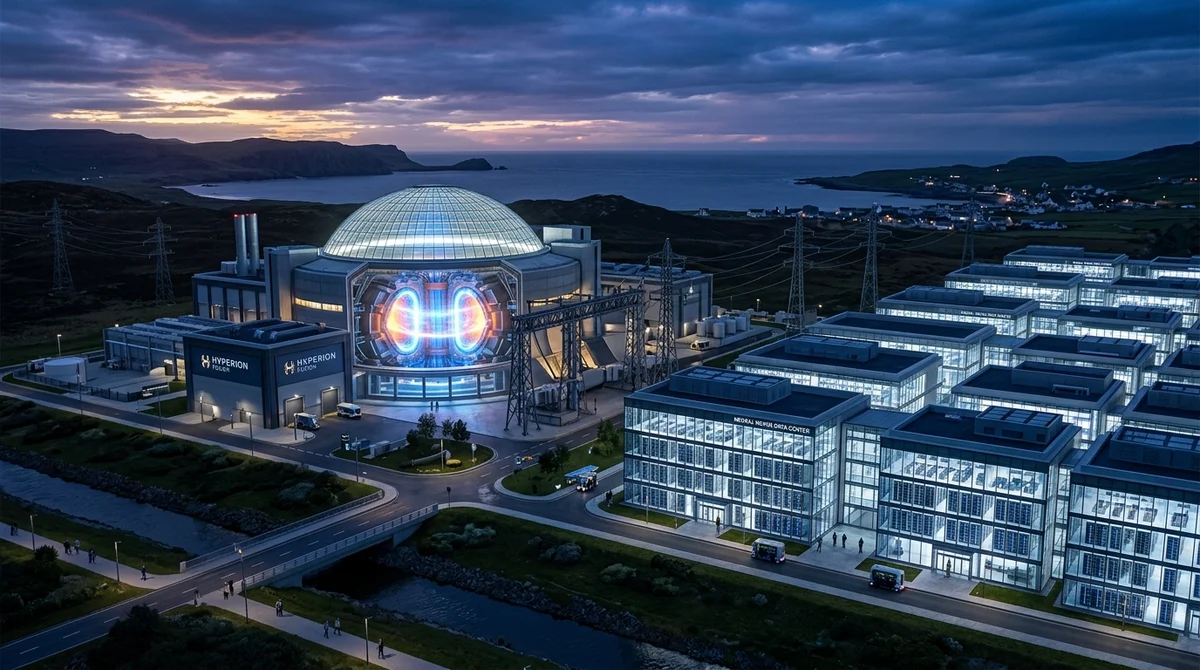
OpenAI is discussing a large electricity purchase from Helion Energy, a startup that promises to bring fusion power into commercial operation. If the framework agreement goes through, it would involve capacity comparable to the power grids of entire regions, not a pilot experiment.
Deal terms
According to Axios, the parties are discussing a structure under which OpenAI could receive the equivalent of 5 gigawatts of capacity by 2030 and scale up to 50 gigawatts by 2035. In the first phase, the companies could reserve about 12.5% of Helion's future output for OpenAI.
This is not yet a final contract but the basic framework of a deal. Conditions remain to be met, including the choice of a site where Helion could generate this power and feed it into the grid.
For OpenAI, this is not just a bet on "green" generation. The main driver is the sharp rise in energy consumption by AI infrastructure. Training and serving large models requires more and more data centers, and with them more and more stable power. Against this backdrop, interest in fusion makes sense: if the technology works at industrial scale, it would provide a nearly carbon-free source of electricity without the weather dependence of some renewables.
Scale and context
The most important thing in this story is not the fact of the talks but their scale. This is not a demonstration purchase but a possible reservation of volumes that exceed Helion's current commercial commitments by orders of magnitude. So far, the company has announced far more modest agreements, with Microsoft and Nucor. That is why the figures under discussion look like a bid for an entirely different class of business, both for Helion itself and for the market for AI energy.
- 5 gigawatts is 5000 megawatts of capacity by 2030
- 50 megawatts is the supply volume under Helion's agreement with Microsoft, announced in 2023
- 500 megawatts is the capacity of the project Helion is developing with steelmaker Nucor
- 2028 is the target date for launching Helion's first commercial plant to supply Microsoft
- about 50 megawatts is the stated capacity of a single Helion reactor
Going by Helion's own estimates, one reactor should deliver roughly 50 megawatts. That means 5 gigawatts for OpenAI would require about a hundred such units, and 50 gigawatts about a thousand. This is an extremely aggressive scaling scenario even for a mature energy company, let alone a startup that is only now bringing its technology to the commercial stage. And this is where the story stops being merely corporate: it becomes a test of how realistic the timelines are for the entire fusion industry.
Conflict and risks
A separate thread is corporate governance. Sam Altman has long been tied to Helion: he chaired its board from 2015, took part in its major funding rounds and is considered the project's largest private investor. Amid the talks with OpenAI, he left Helion's board and, according to Axios, stepped back from discussion of the deal itself. This repeats last year's pattern with Oklo, where Altman also stepped down as chairman to reduce conflict of interest.
But even if the conflict-of-interest question is formally resolved, the technological risk remains. No private company has yet demonstrated commercially operating fusion generation. In February 2026, Helion reported new milestones for its Polaris prototype: operation with deuterium-tritium fuel and a plasma temperature of 150 million degrees Celsius. That is a strong research signal, but the path to stable, cheap and scalable delivery of power to the grid is still long.
What this means
OpenAI is increasingly competing not only on models and chips but on access to electricity. Even if the talks with Helion do not turn into a final deal any time soon, their scale alone shows that the next big race in AI may be fought not over model parameters but over guaranteed energy to run them.
- Nov 2, 2026Arca gives AI agents finance tasks lasting up to 10 days, but leaves the trades to humans
- Nov 2, 2026Meta's Muse assistant keeps dossiers on loved ones and gets root on Ubuntu by default
- Nov 1, 2026Local models lose to Opus and Codex: 0.21 on a MacBook versus 1.00 for Codex
- Nov 1, 2026Kimi scores 96.2% on a 1C database analytics test and emerges as a fallback if Claude access is blocked
Key Questions Answered
What are the key details on Deal terms?
According to Axios, the parties are discussing a structure under which OpenAI could receive the equivalent of 5 gigawatts of capacity by 2030 and scale up to 50 gigawatts by 2035. In the first phase, the companies could reserve about 12.5% of Helion's future output for OpenAI. This is not yet a final contract but the basic framework of a deal. Conditions remain to be met, including the choice of a site where Helion could generate this power and feed it into the grid. For OpenAI, this is not just a bet on "green" generation. The main driver is the sharp rise in energy consum
What are the key details on Scale and context?
The most important thing in this story is not the fact of the talks but their scale. This is not a demonstration purchase but a possible reservation of volumes that exceed Helion's current commercial commitments by orders of magnitude. So far, the company has announced far more modest agreements, with Microsoft and Nucor. That is why the figures under discussion look like a bid for an entirely different class of business, both for Helion itself and for the market for AI energy. 5 gigawatts is 5000 megawatts of capacity by 2030 50 megawatts is the supply volume under Helion'
What are the key details on Conflict and risks?
A separate thread is corporate governance. Sam Altman has long been tied to Helion: he chaired its board from 2015, took part in its major funding rounds and is considered the project's largest private investor. Amid the talks with OpenAI, he left Helion's board and, according to Axios, stepped back from discussion of the deal itself. This repeats last year's pattern with Oklo, where Altman also stepped down as chairman to reduce conflict of interest. But even if the conflict-of-interest question is formally resolved, the technological risk remains. No private company has y
Ship AI Faster with Founders, Engineers & Weekly Architecture Reviews
Inside Vibe Club (hamidun.com/club) — weekly live masterminds with Zhemal Khamidun, Tech Radar, full LMS access, and 370+ production Claude Code skills.
The AI world, distilled — once a week
Seven stories that actually mattered, hand-picked. No noise, no reposts, no press releases.
Done! Check your inbox for a confirmation.