PJM seeks 15 gigawatts of new generation to cover AI data center demand
PJM is launching an emergency search for up to 15 GW of new generation to head off an electricity shortfall as AI data centers multiply. The operator wants to tie new computing sites to new or restarted power plants through a separate procurement mechanism. The story matters beyond the US: the constraint on the AI boom is increasingly not the chip, but access to power.
AI-processed from Bloomberg Tech; edited by Hamidun News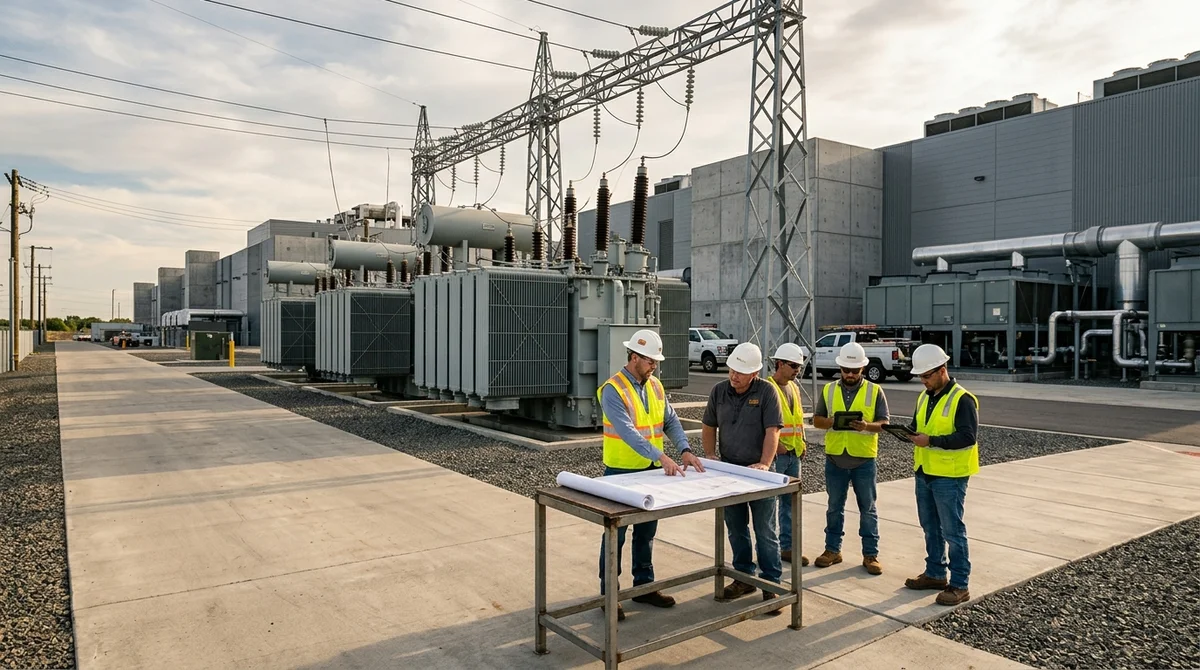
PJM Interconnection is preparing an emergency expansion of its power supply: the operator wants to secure up to 15 gigawatts of new generation so the grid can keep pace with demand from AI data centers. For the industry, it is another signal that the main scarcity in the AI race is not only GPUs, but also megawatts.
Why the urgency
This is not a distant scenario but a practical problem for the next few years. PJM runs the largest power system in the US, and electricity demand in its territory is already climbing sharply because of new data centers and the expansion of existing sites for AI workloads. The grid used to operate with relatively predictable consumption. Now large customers are arriving all at once, each needing tens or hundreds of megawatts with almost no tolerance for outages. For a grid operator, this is now a question of reliability, not just long-term planning.
PJM has already warned of a risk of serious capacity shortfalls in the next decade. Against that backdrop, ordinary market mechanisms and the standard generation interconnection queue appear to be insufficient: new projects are built slowly, some older plants are closing, and the load from computing infrastructure is growing faster than expected even a couple of years ago. That is why the operator is pushing an emergency option, not as a new normal but as an attempt to close the near-term gap between AI growth and available electricity.
How the shortfall would be closed
Based on the published parameters, the operator wants to bring in almost 15 gigawatts of additional capacity, and in parallel it is gathering input from the market on the terms under which such capacity could realistically be added to the system. Two basic scenarios are under discussion: direct bilateral contracts between future large consumers and energy suppliers, and centralized procurement through a special backstop procurement mechanism. The idea is to tie new data centers not to an abstract promise of future energy, but to specific new or restarted sources that can reach the market on the required timeline.
This approach has both a political and a tariff logic. Regulators and market participants have long argued over who should pay for the sharp rise in data center consumption: all grid users, or the tech companies creating the extra demand. PJM's discussions have already featured 15-year long-term contracts, as well as separate requirements for those who want to connect large AI sites quickly. The point is simple: if new load arrives on the system, it should bring a new source of capacity with it, rather than shift the risk of shortage onto households and ordinary businesses.
Where the pressure is greatest
The PJM case shows that the bottleneck in AI is no longer just chips and servers. Physical infrastructure is becoming the limit: generation, transmission lines, permitting timelines, interconnection queues, and a region's ability to bring new facilities online quickly. That is why even strong demand from hyperscale companies does not guarantee an instant data center launch; real power delivery to the grid has to be secured first.
- Load from new AI and cloud sites is growing fastest.
- Generation interconnection queues are not keeping up with the pace of demand.
- New plants and upgrades to old ones take years, not months.
- The risk of capacity shortfalls is already affecting prices and connection terms.
For the energy market, this is also a signal that winners will include not only computing hardware suppliers but also companies that can quickly build, restart, or contract reliable generation. The mechanism itself remains transitional for now: PJM stresses that this is a one-time emergency measure until the market and interconnection rules adapt to the new scale of demand. But the very fact of such a measure shows how quickly AI load has gone from a technology topic to a question of basic infrastructure.
What this means
The AI boom is increasingly running into the limits of the energy sector. Where access to GPUs and capital for building data centers used to be the competitive advantage, guaranteed electricity years ahead is now becoming the deciding factor. For the market, this means a new phase: the winners will be not only model developers and cloud providers, but also the regions that can quickly deliver megawatts, grid connections, and permits to a site.
Key Questions Answered
Why the urgency?
This is not a distant scenario but a practical problem for the next few years. PJM runs the largest power system in the US, and electricity demand in its territory is already climbing sharply because of new data centers and the expansion of existing sites for AI workloads. The grid used to operate with relatively predictable consumption. Now large customers are arriving all at once, each needing tens or hundreds of megawatts with almost no tolerance for outages. For a grid operator, this is now a question of reliability, not just long-term planning. PJM has already warned o
How the shortfall would be closed?
Based on the published parameters, the operator wants to bring in almost 15 gigawatts of additional capacity, and in parallel it is gathering input from the market on the terms under which such capacity could realistically be added to the system. Two basic scenarios are under discussion: direct bilateral contracts between future large consumers and energy suppliers, and centralized procurement through a special backstop procurement mechanism. The idea is to tie new data centers not to an abstract promise of future energy, but to specific new or restarted sources that can re
Where the pressure is greatest?
The PJM case shows that the bottleneck in AI is no longer just chips and servers. Physical infrastructure is becoming the limit: generation, transmission lines, permitting timelines, interconnection queues, and a region's ability to bring new facilities online quickly. That is why even strong demand from hyperscale companies does not guarantee an instant data center launch; real power delivery to the grid has to be secured first. Load from new AI and cloud sites is growing fastest. Generation interconnection queues are not keeping up with the pace of demand. New plants and
Test Frontier LLMs & Autonomous Agents in One Workspace
Run Claude Opus 5.5, GPT-6, Gemini 3.1, and DeepSeek side-by-side in Nomad AI (nomadnet.ai) — unified model routing, deep research, and multimodal workflows under one subscription.
The AI world, distilled — once a week
Seven stories that actually mattered, hand-picked. No noise, no reposts, no press releases.
Done! Check your inbox for a confirmation.