Interactive map exposes Google's hidden data center strategy
An interactive map shows where data centers are being built in the US and how they affect local resources and politics. Isabella Rexopuro of Oregon created it after learning of Google's alleged hidden plans to buy up local land for energy-hungry infrastructure. The map combines data on data center construction, AI policy and access to water resources.
AI-processed from The Verge; edited by Hamidun News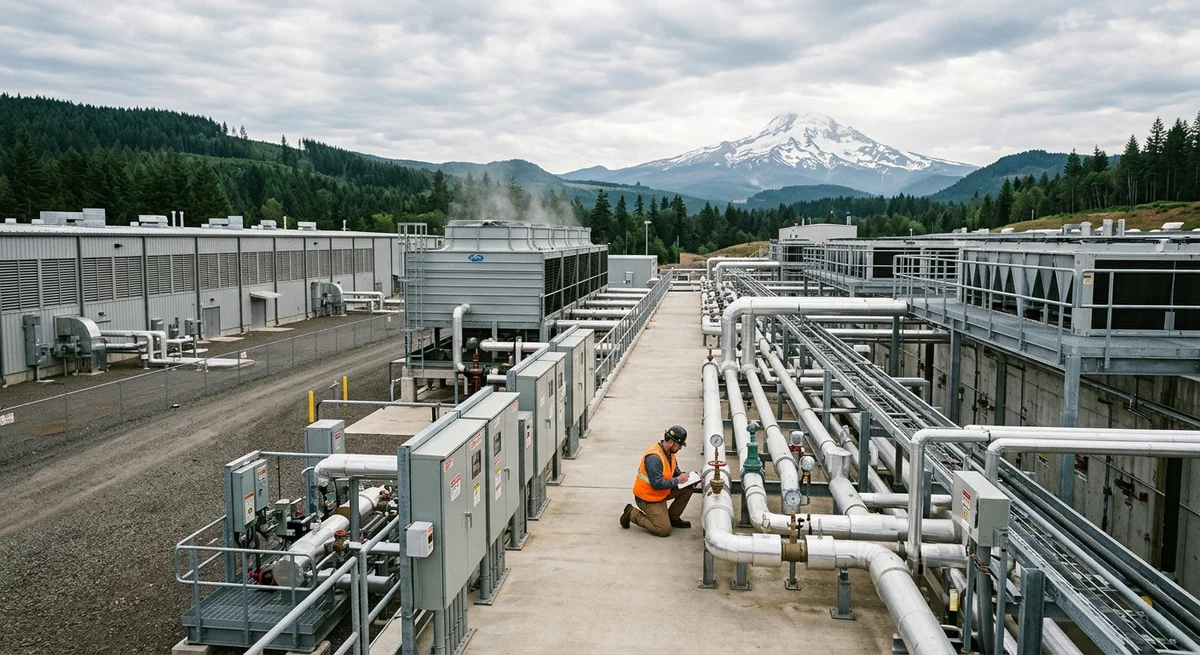
Oregon resident Isabella Rexopuro has built an interactive map showing how data centers are actually distributed across the US, how fast they are growing and how they affect local AI policy. The map debunks myths about the influence of Google and other giants on how land and water are used in the regions.
Why the map was needed
When Rexopuro heard that Google was actively buying up land in Oregon for data centers, she initially doubted the claim. "There is a lot of misinformation circulating around data centers," she says. Google has repeatedly denied seizing land or directly interfering in local land-use decisions. But reality turned out to be far more complicated than it first appeared.
One example: The Dalles, a city near the Washington border, tried to reclaim about 150 acres of land from Mount Hood National Forest. Officially, the reason was purely practical: meeting growing municipal needs as the population increases. But as Rexopuro explains, much more powerful interests stand behind the decision. "Google is just a big, nameless consumer of electricity, and the authorities need water to cool servers," she says. The result is a disguised process: the municipality fights for resources ostensibly for the city, but the main beneficiary is a corporation.
How the interactive map works
The map combines several layers of spatial data that are usually kept in separate sources:
- The geography of existing data centers and their capacity
- Plans for new facilities in the coming years
- State and city policies on AI and regulation
- Availability of water resources for cooling servers
- Information on land-use conflicts and local initiatives
This layered approach shows the full chain of dependencies: data centers are needed to deploy AI models, AI demands enormous computing power, computing demands reliable energy and water, and all of this strains local infrastructure and sparks social conflict.
A global race, local consequences
The decision on where to build data centers is not merely a matter of corporate business strategy. As the map shows, big tech companies systematically pick regions with the cheapest electricity and the most accessible water resources. That makes sense from a profit standpoint, but it puts serious strain on local water and power systems.
In Oregon, Google has already become one of the largest electricity consumers. Local authorities find themselves in a difficult position: they want to attract investment and well-paid jobs, but worry about the environmental and social consequences of concentrating such resource-intensive infrastructure. Rexopuro's map makes this tension visible to residents and politicians.
What this means
Rexopuro's initiative shows how open data and visualization can make complex global trends understandable at the local level. As demand for AI grows exponentially, the question of where to build data centers and what consequences that has for surrounding communities is becoming increasingly political and social.
- Nov 2, 2026Karpathy builds a YouTube clone with 6454 videos from Hacker News recommendations in two hours
- Nov 2, 2026Karpathy used Claude to build HackerTube from 6,454 videos recommended on Hacker News
- Nov 2, 2026Anthropic needs to grow revenue 32% a year to cover $850 billion in contracts
- Nov 2, 2026Bun creator uses Claude Code to port 750K lines from Zig to Rust in 11 days
Key Questions Answered
Why the map was needed?
When Rexopuro heard that Google was actively buying up land in Oregon for data centers, she initially doubted the claim. "There is a lot of misinformation circulating around data centers," she says. Google has repeatedly denied seizing land or directly interfering in local land-use decisions. But reality turned out to be far more complicated than it first appeared. One example: The Dalles, a city near the Washington border, tried to reclaim about 150 acres of land from Mount Hood National Forest. Officially, the reason was purely practical: meeting growing municipal needs a
How the interactive map works?
The map combines several layers of spatial data that are usually kept in separate sources: The geography of existing data centers and their capacity Plans for new facilities in the coming years State and city policies on AI and regulation Availability of water resources for cooling servers Information on land-use conflicts and local initiatives This layered approach shows the full chain of dependencies: data centers are needed to deploy AI models, AI demands enormous computing power, computing demands reliable energy and water, and all of this strains local infrastructure a
What are the key details on A global race, local consequences?
The decision on where to build data centers is not merely a matter of corporate business strategy. As the map shows, big tech companies systematically pick regions with the cheapest electricity and the most accessible water resources. That makes sense from a profit standpoint, but it puts serious strain on local water and power systems. In Oregon, Google has already become one of the largest electricity consumers. Local authorities find themselves in a difficult position: they want to attract investment and well-paid jobs, but worry about the environmental and social conseq
Test Frontier LLMs & Autonomous Agents in One Workspace
Run Claude Opus 5.5, GPT-6, Gemini 3.1, and DeepSeek side-by-side in Nomad AI (nomadnet.ai) — unified model routing, deep research, and multimodal workflows under one subscription.
The AI world, distilled — once a week
Seven stories that actually mattered, hand-picked. No noise, no reposts, no press releases.
Done! Check your inbox for a confirmation.