Habr AI
AI news source. Articles are auto-selected and adapted by Hamidun News editors.
Latest publications

Claude Code users criticize Anthropic Opus 4.7, recommend reverting to 4.6
Following Claude Opus 4.7's release, some Claude Code developers complained about the model's laziness, hallucinations, and context loss, with rollback to Opus 4.6 emerging as the working solution.

VK shows DataCopilot — multi-agent system for corporate data and documentation
VK unveiled DataCopilot — a multi-agent assistant for corporate data repositories: it searches data marts, explains data structure, suggests access permissions, and writes ETL scripts.
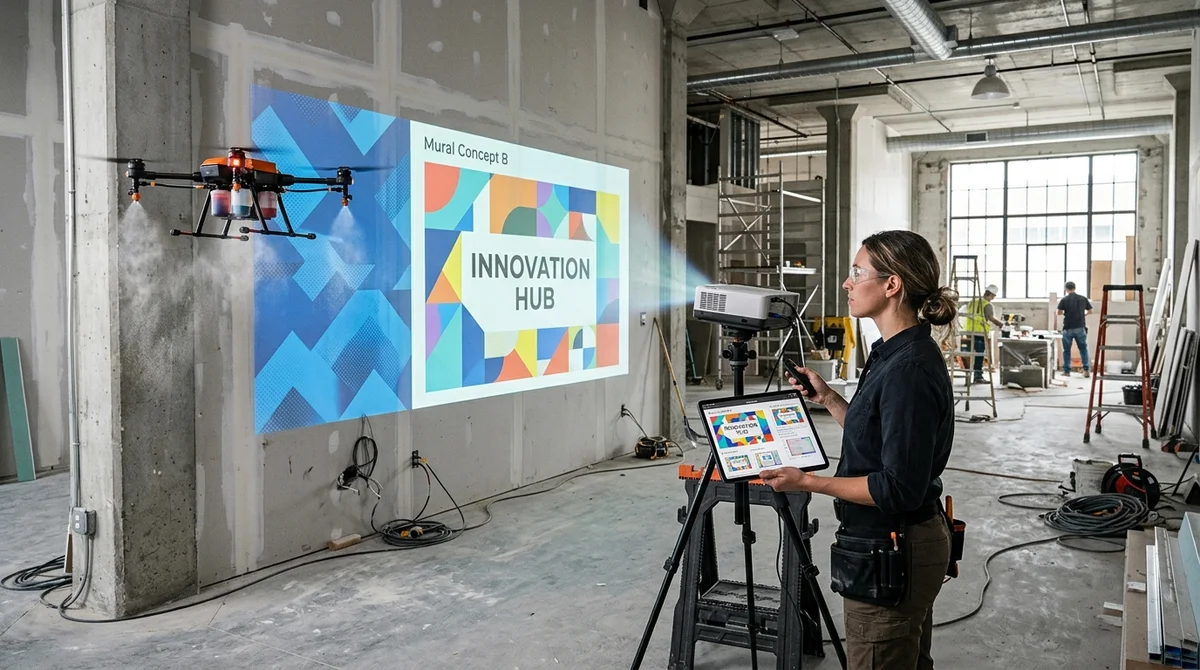
Wallmates: How projectors, drones, and AI are changing design and decoration of commercial spaces
Wallmates agency demonstrated how projectors are already reducing manual work in interior design projects, why AR still isn't ready for on-site implementation, and where AI with drones will deliver the next breakthrough.
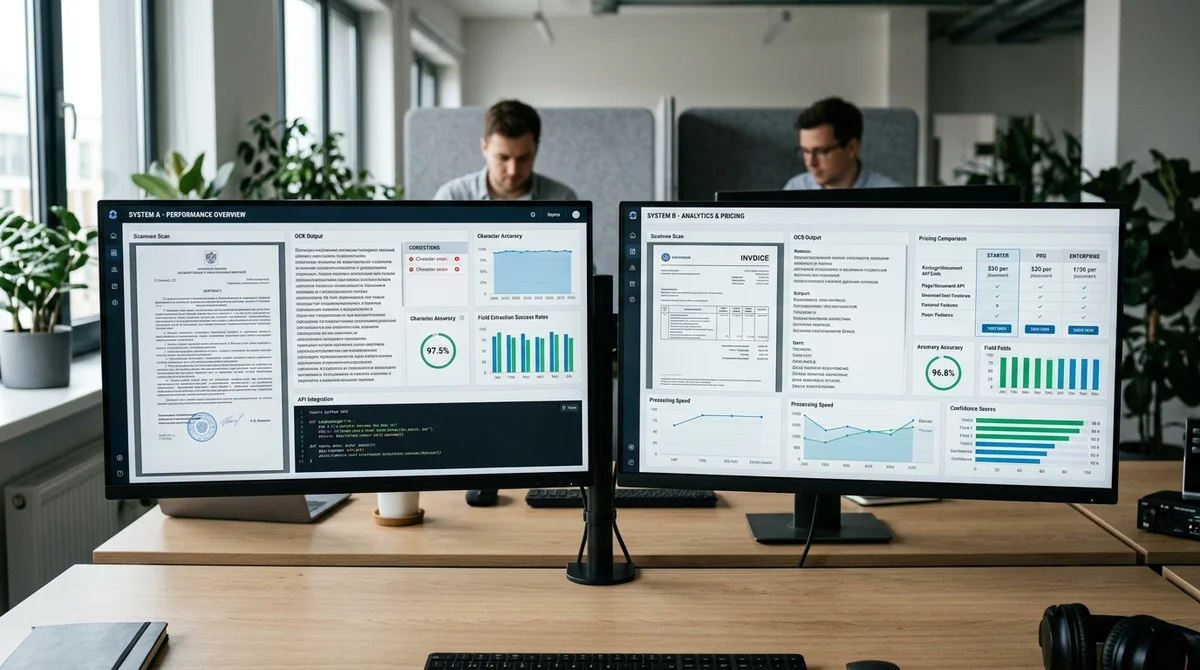
DeepSeek V4 Pro vs Claude Sonnet 4.6 on 50 real tasks: where to save, where the risk lies
A test of 50 real-world tasks by a Russian developer showed that DeepSeek V4 is noticeably cheaper than Claude Sonnet 4.6, but makes more errors in calculations, OCR, and local terminology.

Smart Service Group tests voice control for pallet transport robot
Smart Service Group's initial test showed that voice can trigger pallet robot scenarios in a warehouse, but only with strictly defined commands, safety checks, and clear operator feedback.

Anthropic removes Claude Code from $20 plan, SpaceX prepares Cursor acquisition
Anthropic tests removal of Claude Code from $20 subscription, Duolingo removes AI metrics for employees, and closed Claude Mythos model found via guessed URL.
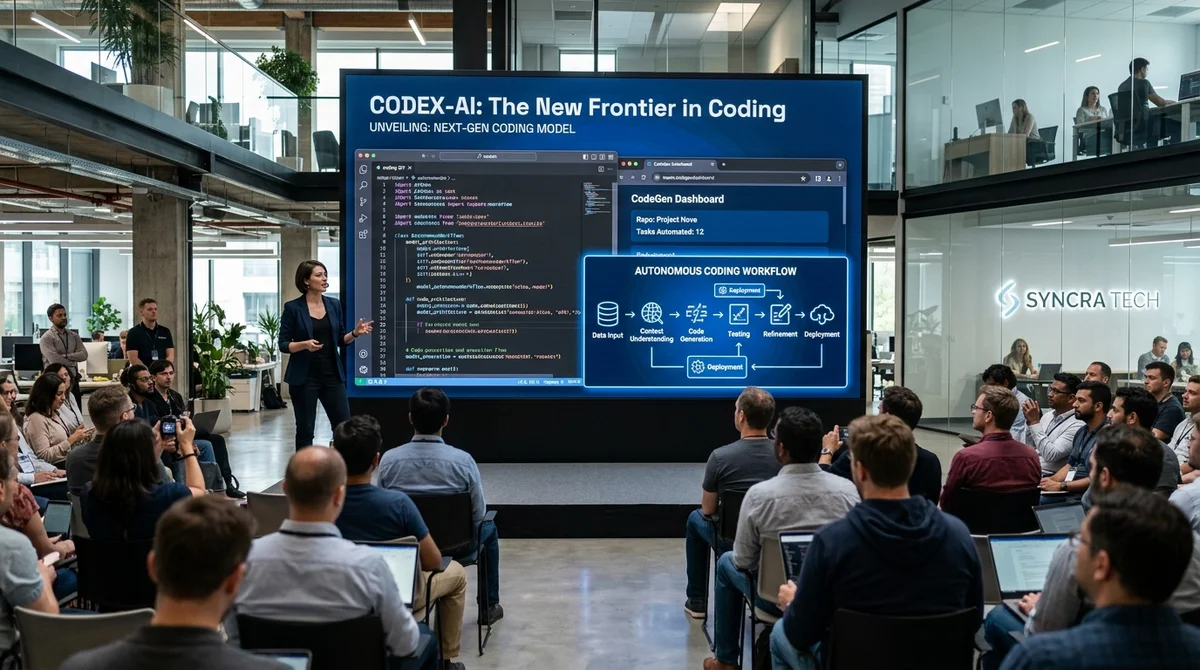
OpenAI released GPT-5.5: stronger in programming, agents, and computer work
OpenAI launched GPT-5.5 focused on code, agentic tasks, and computer work: the model is already available in ChatGPT and Codex, but the API is not yet open, and pricing has doubled versus GPT-5.4.

NextFilm describes movie recommendation model: cold start, taste vector and GPT layer
NextFilm's author showed how to recommend movies to new users: collect initial ratings, build a taste vector, compare it with MovieLens and add GPT for final ranking.

n0x Developer Taught His Browser Agent to Open Sites and Take Screenshots
The n0x project evolved from a regular language chatbot into a browser agent with MCP support: it now opens websites, takes screenshots, and executes commands on demand.

Anthropic Tests Claude Mythos: Leak Reveals Model with 10 Trillion Parameters
An internal Anthropic leak has revealed Claude Mythos — a model the company considers its most powerful AI and is not yet ready to release publicly due to cost and safety risks.

Anthropic and OpenClaude: why 'free' Claude Code in 2026 isn't really free
After Claude Code's source code leak, the community quickly assembled OpenClaude, but behind the promise of free AI coding lie compatibility constraints, infrastructure limitations, and model costs.

How a single system instruction turns an LLM into a reliable tool: tests on Qwen and DeepSeek
A single system prompt can eliminate LLM hallucinations: an experiment with Qwen and DeepSeek showed that an 'exoskeleton' of rules transforms a model from an overconfident liar into a trusted tool.

T-Technologies on Open Source in AI/ML: Inside the LLM Development Process
Interview with the AI/ML team at T-Technologies Group — about LLM development, participation in open source, and research directions.

NVIDIA at GTC 2026 Shifts Focus From Chips to Token Factories and Agent-as-a-Service
At GTC 2026, NVIDIA showcased a bet not on individual GPUs, but on token factories, the modular Vera Rubin architecture, and AI agents as a service economics.

PageIndex from VectifyAI offers embedding-free search for long documents
PageIndex builds a tree-structured document outline and searches for relevant sections through LLM reasoning, promising RAG without embeddings, but at a notable cost in resources and speed.

GolangConf 2026 and Ontiko: Why Go Teams Need to Fix Architecture, Not Code Speed
Ontiko is restructuring GolangConf 2026 around the real pain points of Go teams: AI has accelerated code writing, but architectural decisions, scaling, and system complexity have become the primary bottleneck.

ruGPT3XL Gains 8k Context: Restored Model Transcends 2k Limit with Minimal Losses
The ruGPT3XL restoration author fixed sparse attention, increased model context from 2k to 8k, and preserved quality on short sequences with minimal noticeable regression.

OpenAI, MiniMax and Nvidia Set the Tone for March in AI: Sora, GPT-5.4 and the Bet on Mira Murati
March in AI was defined by major product shifts: OpenAI reconsiders Sora's future, Google and Anthropic accelerate their assistants, while MiniMax and Nvidia hint at a new round of competition.

AI-first startups: why growth marketing stalls and what breaks in the funnel
Strong top-of-funnel metrics for AI-first products often mask false demand: people come for novelty, not to solve a problem, so the conventional growth funnel starts to lie.

Habr: AI agents change delivery, and teams must rebuild the entire development cycle
Habr explains why with the emergence of AI agents, teams need to restructure not only code writing but the entire delivery: context, checks, execution rules and learning loop.

M2 delegated 40% of marketing texts to AI and maintained content quality
The M2 team embedded an AI copywriter into its internal editorial department, assigned 40% of product and marketing texts to the model, and maintained consistent tone, quality control, and security.
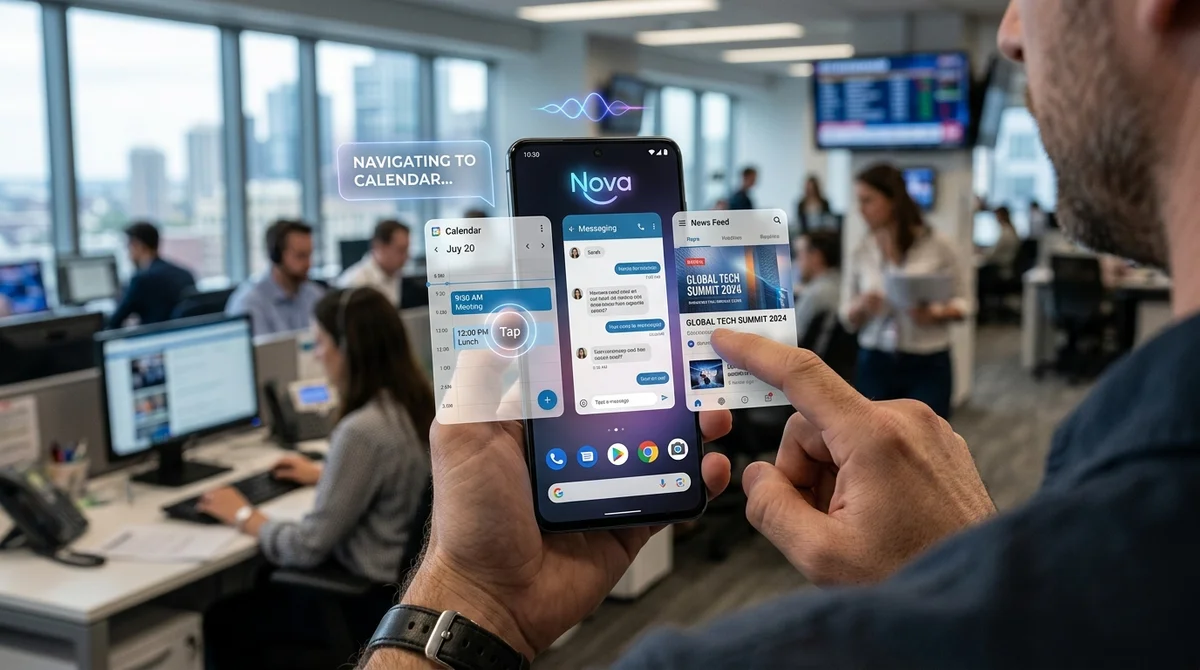
Sova AI Released Android Assistant That Controls Phone Without PC and Root
Sova AI unveiled an Android application with an AI agent that opens apps, presses buttons, scrolls screens, and executes voice commands without PC connection.

OpenAI API and GPT Fan-Out Queries: How SEO Specialists Analyze AI Search
The author demonstrates how to retrieve hidden GPT fan-out queries via the OpenAI API and use them to analyze how AI models gather sources and generate answers.

Hack The Box: How MCP Inspector Turns AI Tools into a New Attack Vector
A breakdown of Kobold from HTB Season 10 shows how a single dev utility for AI servers can lead to RCE, LFI, credential reuse, and complete host compromise via Docker.

LLM-based system reduced quality control map preparation at metallurgical plant from 2 hours to 5 minutes
At a metallurgical plant, an LLM-system began assembling quality control maps in 3–5 minutes instead of two hours: not a universal prompt, but a set of rules tied to each GOST proved effective.

Habr AI Shows How to Add Memory and Context to an LLM Chat in Python with Ollama and LiteLLM
In a new part of the tutorial on Python chat with Ollama and LiteLLM, the author demonstrates how to store message history, pass context to the model, and limit memory without complicating the architecture.

Claude Sonnet and Jarvis Pattern: why AI agents might not need more than an operating system
On Habr, developers proposed building personal AI agents not around complex frameworks, but on a combination of LLM, operating system, and file-based memory—with a focus on real DevSecOps tasks.

Yandex showed how to reach Alice answers and measure search visibility
Yandex launched a 'Website Visibility in Alice' section in Webmaster. The message to businesses is clear: assistant answers come not from tricks, but from solid SEO, proper page structure, and accurate data.

Flant: How a Go Developer Turned Zed and Gemini into a Useful AI Agent
A Go developer from Flant described the path from slow IDE plugins to a combination of Zed, Gemini 3 Flash, and gopls-mcp, which provides an AI agent with project context and real value in code.

Agentis Memory: Redis-Compatible Storage with Vector Search and Local Embeddings
Agentis Memory transforms a Redis-compatible store into shared memory for AI agents: with local embeddings, built-in vector search, and no external APIs.