MarkTechPost
AI news source. Articles are auto-selected and adapted by Hamidun News editors.
Latest publications

SuperClaude Framework helps structure workflows for Claude API
SuperClaude Framework provides developers with built-in components for creating advanced AI workflows: commands, agents, execution modes, and session memory — all in one system.

Tencent Released a Local Memory System for AI Agents TencentDB
Tencent open-sourced TencentDB Agent Memory — a local memory system for AI agents that reduces token consumption by 61% and improves accuracy by 28%.

NVIDIA Introduces Gated DeltaNet-2: Linear Attention with Separate Memory Gates
NVIDIA has created a new linear attention mechanism, Gated DeltaNet-2, which improves memory management in large language models through separate erase and write gates instead of a single gate.

Perplexity Opens Bumblebee Scanner to Protect Developer Systems
Perplexity has published the source code for Bumblebee, a tool for scanning vulnerabilities in developer system dependencies without running any code.

Google Introduces Gemini 3.5 Flash: Fast and Affordable Model for Coding and AI Agents
At I/O 2026, Google introduced Gemini 3.5 Flash — a model that is 75% cheaper than the flagship version, runs 4 times faster, and outperforms it on coding and automation tasks.

Alibaba releases a translator with 2.8-second latency across 60 languages
Alibaba introduced a model for real-time translation of video and speech simultaneously across 60 languages — with minimal latency and preservation of the speaker’s voice.

NVIDIA introduced Nemotron-Labs-Diffusion: a model with triple decoding
NVIDIA has released the Nemotron-Labs-Diffusion language model, which combines three decoding modes and processes tokens 6 times faster than Qwen3-8B.

Generating knowledge graphs from text: a practical guide with kg-gen and NetworkX
A tutorial on automatically extracting entities and relations from text with kg-gen, building interactive knowledge graphs, and analyzing them with NetworkX.

Turbovec: a Rust vector index with Google Research's TurboQuant algorithm
Turbovec uses Google's TurboQuant algorithm to compress vectors 16x without pre-training, simplifying the deployment of RAG applications.

Best platforms for agentic AI in 2026: ranking of Salesforce, Microsoft, and others
Companies are moving from pilots to production. MarkTechPost compiled a top-10 ranking of agentic AI platforms: Salesforce Agentforce, Microsoft Copilot Studio, ServiceNow, and others. Verified pricing and real-world dep
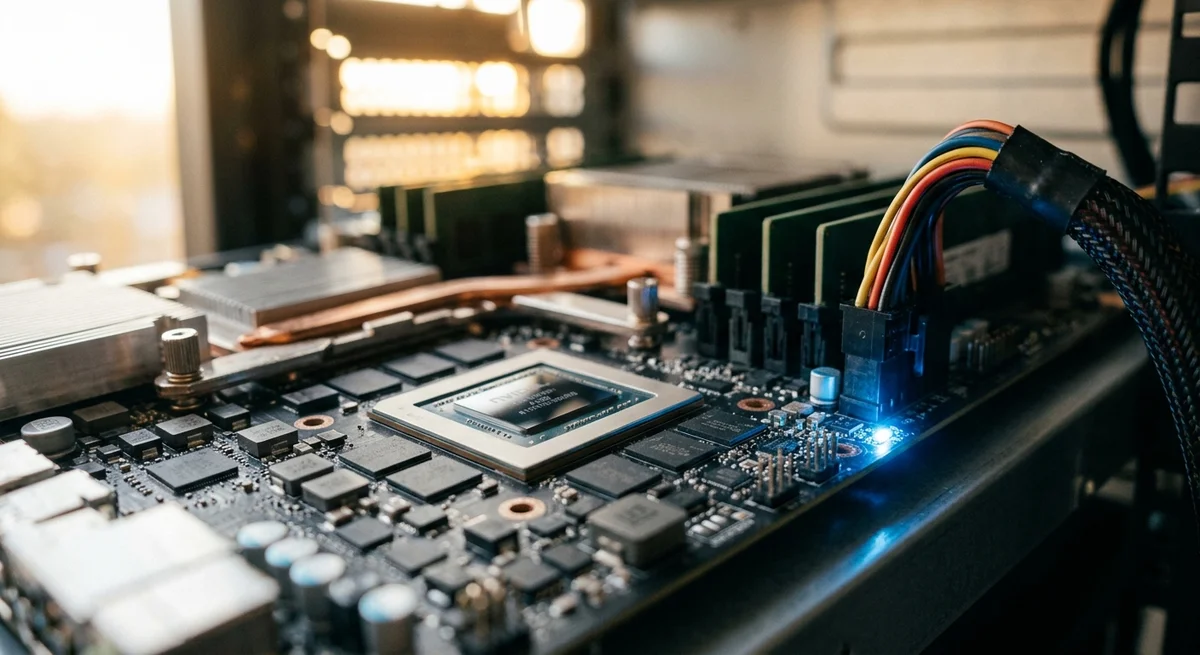
NVIDIA developed a method for training neural networks at 4-bit precision
NVIDIA introduced NVFP4, a methodology for training large models at 4-bit precision instead of the standard 8-bit, halving memory use without loss of quality.
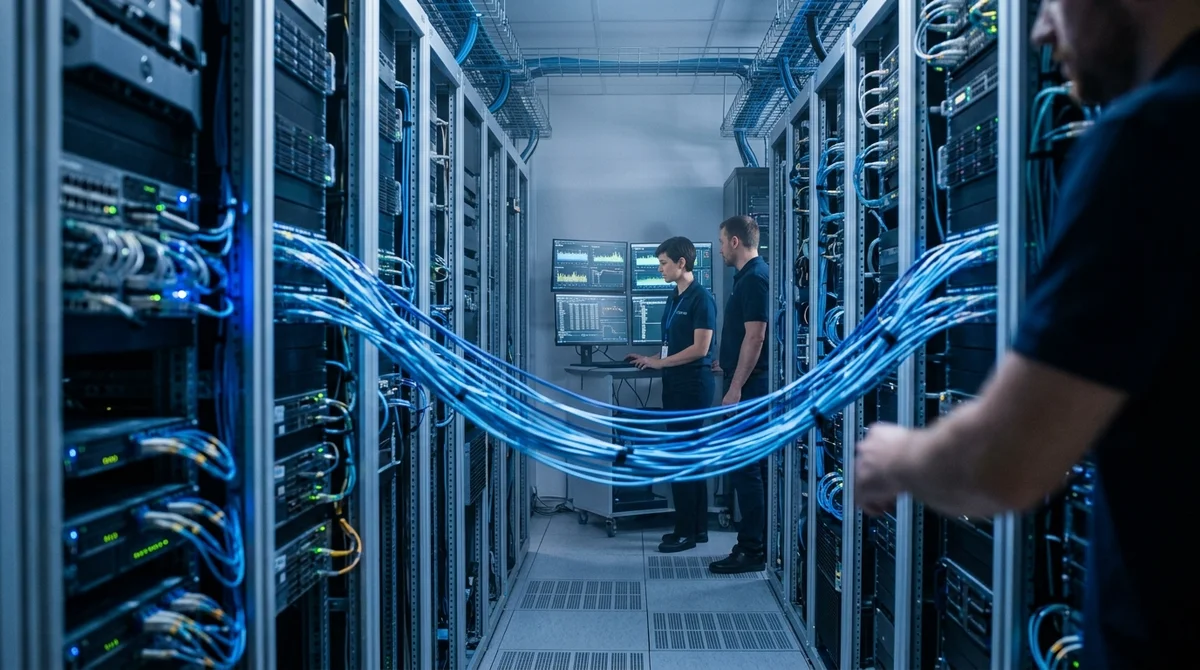
OpenAI unveils the MRC protocol for supercomputer networks with millions of GPUs
OpenAI has created a new open network protocol, MRC, for large AI clusters. It distributes data across hundreds of paths and recovers from failures in microseconds, enabling the construction of supercomputers with 100,00

Meta AI introduces NeuralBench — a framework for testing brain activity models
Meta released NeuralBench, an open framework for standardized testing of EEG-based AI models, bringing 36 tasks, 94 datasets, and 13,603 hours of brain recordings into a single interface.

How to compress a language model 3x: a guide to FP8, GPTQ, and SmoothQuant
Developers received a step-by-step guide to compressing large language models with llmcompressor, comparing the effectiveness of FP8, GPTQ, and SmoothQuant quantization to reduce hardware load.

OpenAI released three audio models: translation, transcription, and real-time reasoning
OpenAI expanded the Realtime API with three new audio models for voice processing: reasoning agents, multilingual translation, and streaming transcription.

Anthropic created a tool to translate Claude's thoughts into human language
Anthropic developed Natural Language Autoencoders, a technology that translates Claude's internal activations into textual explanations, revealing how the neural network works.
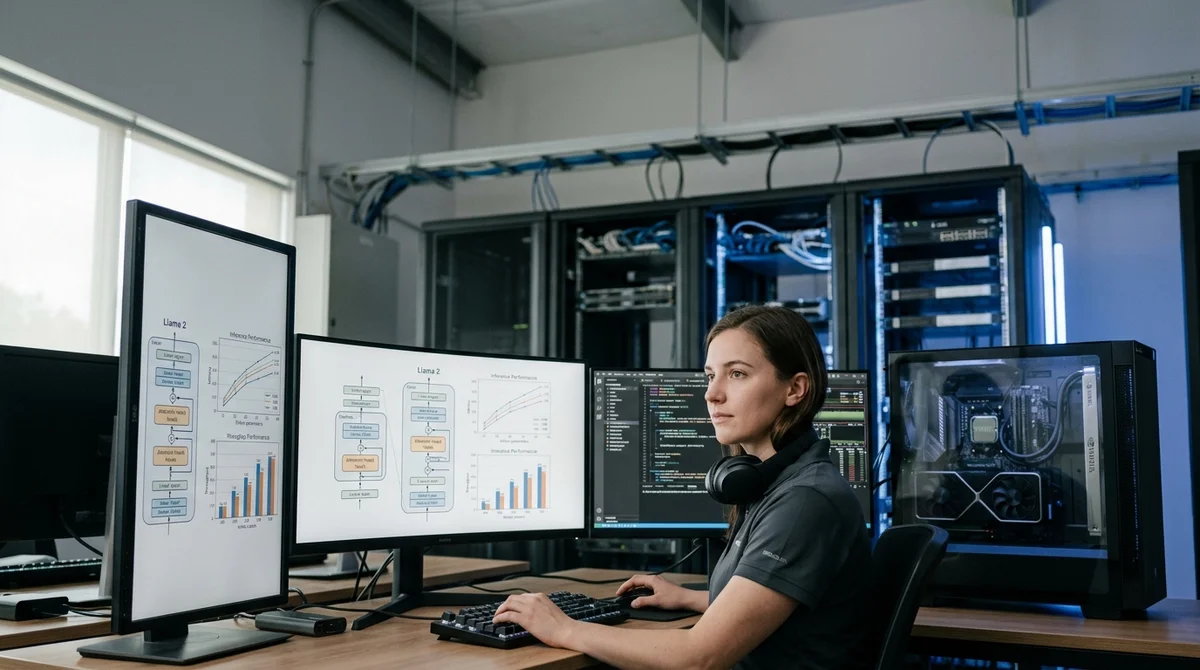
NVIDIA packed 3 models into one file and made training 360× more efficient
NVIDIA introduced Star Elastic, a method that packs three models of different sizes into a single checkpoint and enables training that is 360× more efficient.
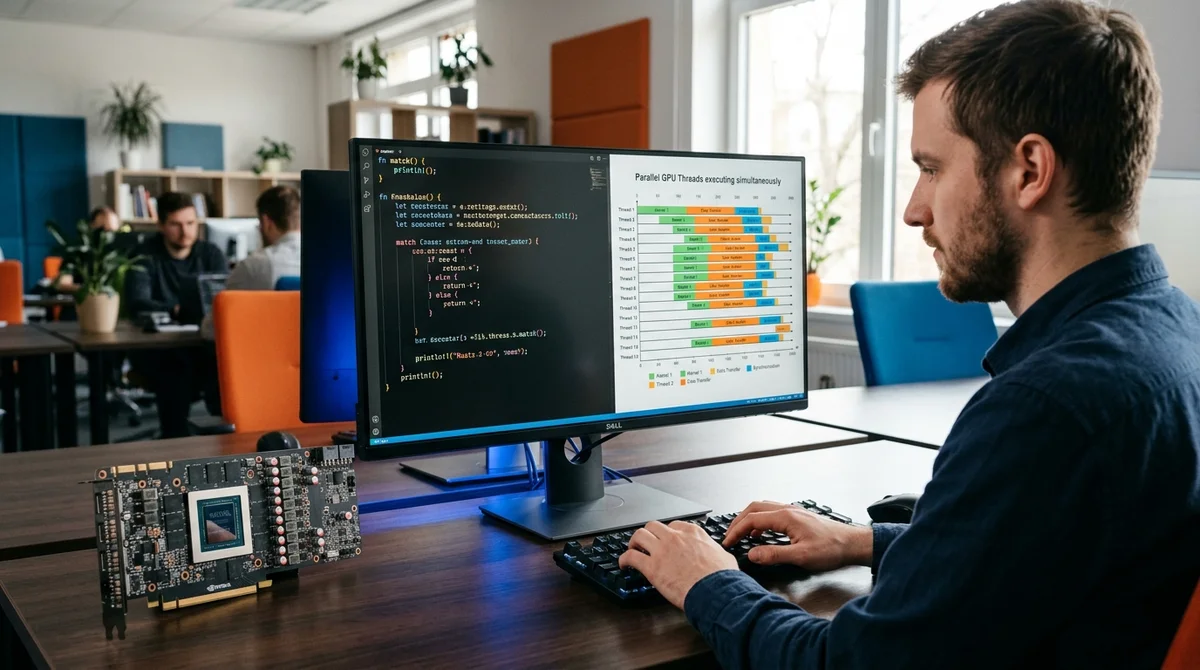
NVIDIA released cuda-oxide: a compiler for Rust code on GPUs
NVIDIA introduced cuda-oxide, a tool for compiling Rust functions directly into PTX code for GPUs. This will simplify the development of CUDA applications in Rust and make parallel computing more accessible.

NadirClaw: saving on LLM requests with smart prompt routing
NadirClaw is a tool for intelligent prompt routing that classifies requests as simple or complex, sending them to the appropriate model to reduce costs.

Hermes Agent by Nous Research took the lead in token usage on OpenRouter
The open-source AI agent Hermes Agent by Nous Research surpassed the closed-source platform OpenClaw and took first place on OpenRouter, generating 224 billion tokens a day. This happened in just three months and shows t

Vector Database Comparison in 2026: Nine Systems by Cost, Scale, and Architecture
Nine leading vector databases are now key infrastructure for RAG and agential AI. A review of architecture, cost, and scalability helps choose the right system for the task.

Vercel Labs introduces Zero — a language for AI agents to write, fix, and ship code
Vercel released Zero — a programming language where the compiler outputs JSON instead of text so AI agents can independently write, fix, and deploy native programs

How Memori creates persistent memory for agents and multi-session LLMs
Memori is a memory infrastructure for LLM applications that lets agents retain context across sessions and work with multiple users at the same time.

SHAP for machine learning: comparing explainers and a practical guide
A new guide shows how to choose between four SHAP methods for interpreting models — from the fast Tree to the versatile Kernel.

DeepMind built a Gemini-powered AI mouse so users don't switch to chats
Google DeepMind unveiled a Gemini-based AI mouse that analyzes the context around the cursor and lets users issue voice commands without opening a separate window.

Mira Murati unveiled the first system for natural real-time dialogue with AI
Thinking Machines Lab introduced TML-Interaction-Small, a model that listens and responds at the same time, processing speech, video, and text without delays — for the first time, AI can converse like a human.

Nous Research introduced Lighthouse Attention to accelerate LLM training
Nous Research published a new attention mechanism, Lighthouse Attention, which speeds up large language model training by 1.4–1.7x when handling long contexts.

GLiGuard by Fastino Labs: a safety model 16x faster than larger competitors
Fastino Labs released the open GLiGuard model for LLM safety checks: just 300M parameters, yet more accurate than models 90 times larger.

Shadow AI in 63% of companies: how tools outpaced corporate policies
Most companies still lack formal AI governance policies, while employees are already actively adopting tools on their own — creating serious security risks.
Nous Research sped up LLM pretraining 2.5x without changing the architecture
Nous Research developed Token Superposition Training, a method that cuts language model pretraining time by 2.5x without changing the architecture or inference behavior.