MarkTechPost
AI news source. Articles are auto-selected and adapted by Hamidun News editors.
Latest publications
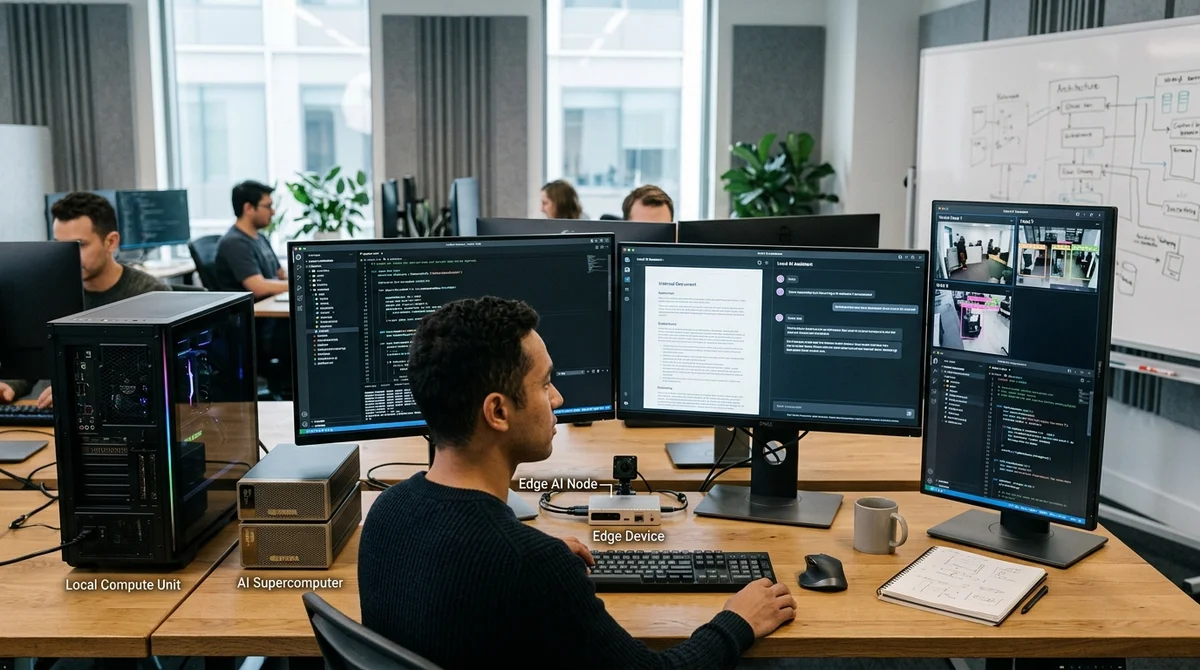
Google Gemma 4, NVIDIA, and OpenClaw: Local AI Agents Without Per-Token Billing
Google and NVIDIA are promoting local deployment of Gemma 4 on RTX, Jetson, and DGX Spark so that always-on AI agents like OpenClaw run faster, cheaper, and without cloud token billing.

Talkie-1930: Researchers released a 13B model with no knowledge of the internet and World War II
Talkie-1930 is an open 13B model trained only on English texts up to 1931 to study historical thinking, data leaks, and AI's ability to generalize beyond its era.

MarkTechPost Demonstrates How to Build a Lightweight VLA Agent with Latent World Model and MPC
In a new tutorial, MarkTechPost breaks down how to build a simplified embodied agent: it operates on RGB frames, learns a latent world model, and plans actions through MPC.

Arcee AI Released Trinity Large Thinking — Open Reasoning Model for AI Agents
Arcee AI open-sourced Trinity Large Thinking weights under Apache 2.0 license and focused on long agent scenarios, multi-step reasoning, and confident tool use.

NVIDIA Showcased Complete Model Optimization Pipeline with FastNAS Pruning and Fine-tuning
NVIDIA released a practical guide to Model Optimizer: a single Colab notebook demonstrates ResNet20 training, FastNAS pruning under FLOPs limit, and quality recovery through fine-tuning.

TII Releases Falcon Perception — 0.6B Model for Object Segmentation and Text-Based Search
TII unveiled Falcon Perception — a compact 0.6-billion-parameter vision-language model that searches and segments objects from plain text queries, outperforming SAM 3 on complex requests.
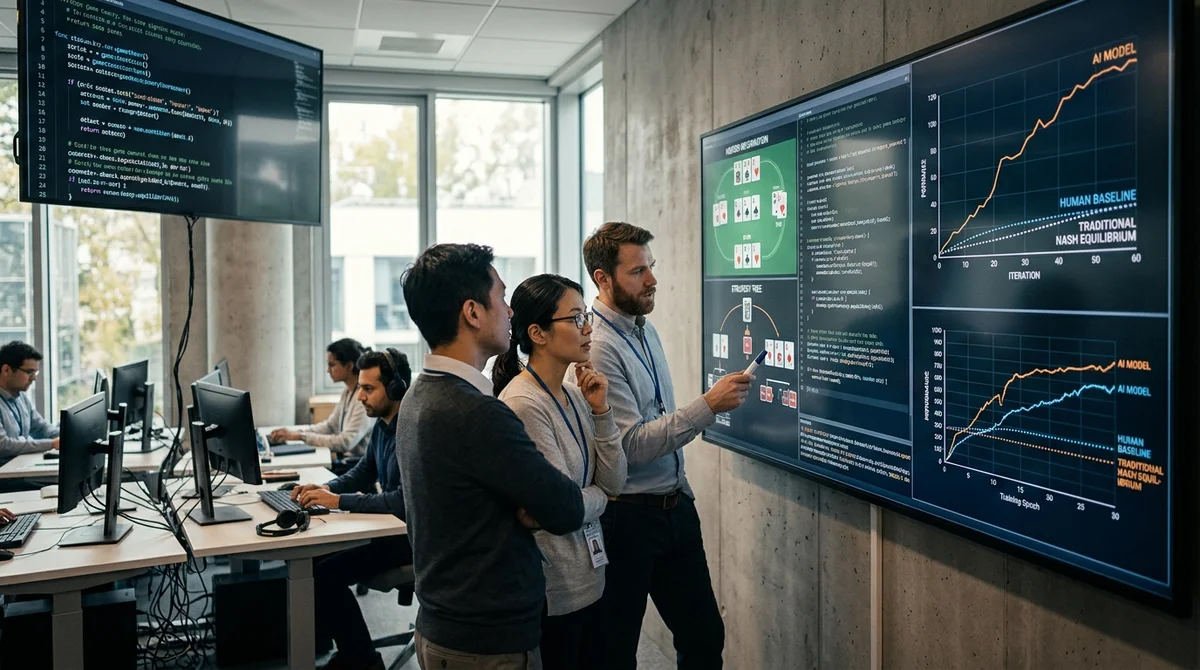
Google DeepMind Enables LLM to Rewrite Game Theory Algorithms and Surpass Experts
Google DeepMind demonstrated that AlphaEvolve can rewrite code for game algorithms with incomplete information and find solutions that outperform manual expert versions on most tests.

Z.AI showed how to build production-ready agentic systems on GLM-5 with tool calling
Z.AI released a detailed GLM-5 tutorial: from SDK setup and OpenAI-compatible API to streaming, tool calling, JSON output, and a multi-turn agent for production.

Netflix Opens Void — Model for Removing Objects from Video with Scene Physics Consideration
The Netflix and INSAIT team released Void as open source — a system that removes objects from video while simultaneously recalculating falls, object support, and other physical consequences.

How Artificial Intelligence Helps Clothing Brands Design Fashion's Future
Algorithms already help fashion brands create collections faster, forecast trends, reduce overproduction, and personalize shopping, but also raise questions about authorship and labor.

How to Build a Netflix Void Pipeline for Object Removal from Video Using CogVideoX
A detailed walkthrough shows how to deploy the Netflix Void model, download required checkpoints, prepare input data, and run object removal from video via CogVideoX.

Gladstone Institutes Present MaxToki — an AI Model That Predicts Cell Aging
Gladstone Institutes' MaxToki model learns to see not a 'snapshot' of a cell, but its trajectory over time, assesses aging acceleration, and identifies intervention targets.

TinyFish Launched Unified Web Platform for AI-Agents with Search, Fetch, Browser and Agent
TinyFish combined search, page rendering, browser sessions, and autonomous web workflows in a single platform for AI-agents with a single API key and shared credit pool.

Google added Skills to Chrome and turned AI prompts into one-click scenarios
Google launched the Skills feature in Chrome: Gemini users will be able to save frequently used prompts as reusable scenarios and run them in the browser with one click.
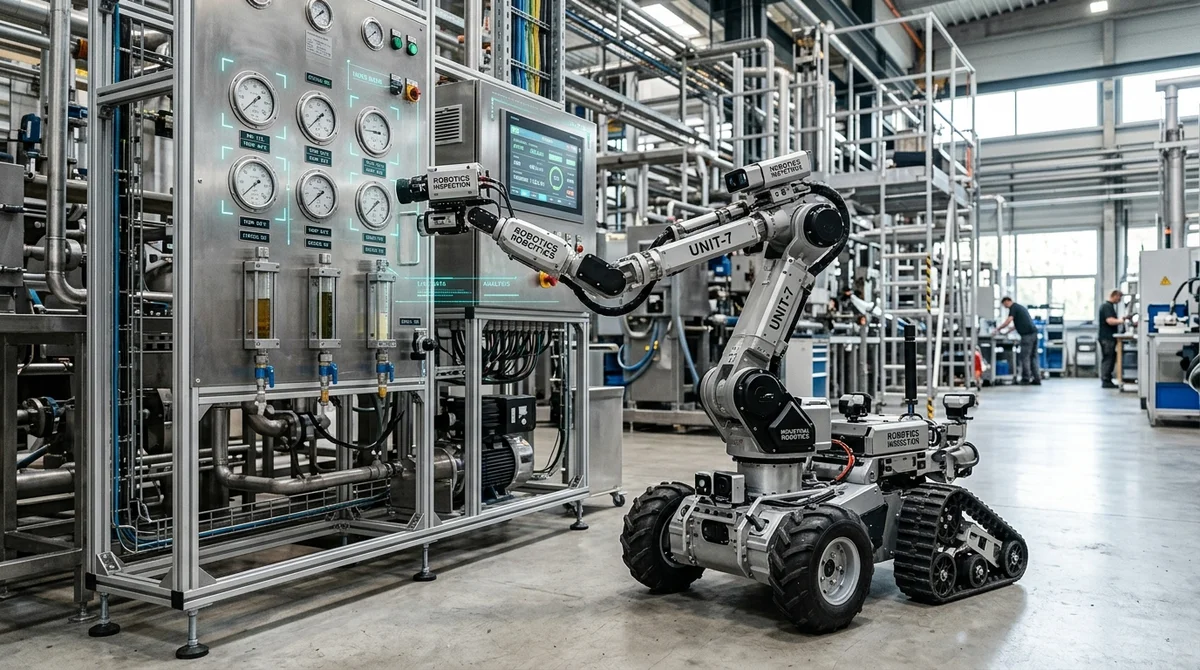
Google DeepMind Presents Gemini Robotics-ER 1.6 for Robot Autonomy and Instrument Reading
Google DeepMind updated Gemini Robotics-ER to version 1.6: a model for robots that better understands space, handles multiple video streams, and can read complex industrial instruments.

MarkTechPost broke down the complete training cycle of large language models: from data to deployment
MarkTechPost released a detailed breakdown of how LLMs are built today: from pretraining on massive corpora to SFT, RLHF, reasoning optimization, and production deployment.

Google Introduced Gemini 3.1 Flash TTS — Speech Model with Control, Dialogues and 70+ Languages
Google launched Gemini 3.1 Flash TTS in preview: the model synthesizes text in 70+ languages, supports dialogues with two voices, and allows controlling delivery through audio tags.

Mem0 and OpenAI: How to Build a Universal Long-Term Memory Layer for AI Agents
A new tutorial breaks down the combination of Mem0, OpenAI models, and ChromaDB: it extracts facts from ordinary conversations, stores them by user_id, searches by semantic meaning, and injects them into the agent's resp

SmolAgents: How to Build a Multi-Agent AI System with Code and Dynamic Orchestration
A breakdown of SmolAgents implementation shows how lightweight AI agents execute code, invoke tools, work with memory, and coordinate tasks within a single system.

NetKet and JAX: How to Build a Transformer Model for Frustrated Spin Systems
The guide shows how to build a research VMC pipeline using NetKet, JAX, and Transformer architecture for modeling a frustrated spin chain J1-J2.

OpenAI Presented GPT-Rosalind — an AI Model for Biology, Genomics, and Drug Development
OpenAI launched GPT-Rosalind — a specialized model for biology and pharmaceuticals that helps accelerate drug development, genomic data analysis, and experiment planning.

Google Presented Auto-Diagnose — an AI System for Finding Causes of Integration Test Failures
Google presented Auto-Diagnose — a system based on Gemini 2.5 Flash that automatically analyzes logs from failed integration tests and identifies the root cause of failures with 90.14% accuracy.

OpenAI GPT-OSS: Launching Open-Weight Models in Colab with MXFP4 and Advanced Inference
A new guide explains how to launch openai/gpt-oss-20b in Google Colab: install dependencies for Transformers, check GPU, enable MXFP4 quantization, and build a working inference pipeline.

Anthropic releases Claude Opus 4.7 for agentic programming, vision, and autonomous tasks
Anthropic introduced Claude Opus 4.7 — an update to its flagship model with notable improvements in agentic coding, detailed image analysis, and long autonomous tasks.

PrismML Bonsai: How to Run a 1-Bit Model on CUDA with GGUF, JSON and RAG
In a new PrismML Bonsai tutorial, we covered how to run Bonsai-1.7B on GPU via CUDA and GGUF, measure throughput, configure chat, strict JSON output, and a basic RAG scenario.

xAI launches separate Grok APIs for speech recognition and synthesis for corporate developers
xAI has split Grok's voice stack into standalone APIs: Speech-to-Text and Text-to-Speech for business with aggressive pricing, multilingual support, and focus on the voice applications market.

NVIDIA released Ising — the first open family of AI models for quantum-classical systems
NVIDIA presented Ising — an open family of AI models for quantum processor calibration and error correction to bring useful hybrid quantum-classical systems closer to reality.

Why LoRA Breaks in Production and How RS-LoRA Saves Model Fine-tuning
LoRA excels at style and format, but loses signal when fine-tuning with new facts; RS-LoRA solves the problem by changing the scaling formula to a more stable one.

OpenKB and OpenRouter show how to build a local AI knowledge base with Llama search
A new tutorial explains how to deploy a local knowledge base on OpenKB, connect an open model via OpenRouter, and safely configure search without hardcoding keys.

OpenAI and Magika showed how to build a pipeline for file recognition and threat analysis
The guide demonstrates a practical pipeline where Magika determines the actual file type from bytes, and OpenAI helps interpret the result and identify potential risks.