SpaceX veterans raise $50 million for optical networking for AI
Mesh, founded by former SpaceX engineers, has raised $50 million in a Series A round. The startup is building high-performance optical transceivers for data centers that run AI workloads. With network bandwidth in short supply, Mesh offers a scalable way to link thousands of GPUs into a single system. The funding will go toward launching mass production of components that are meant to become a key link in the infrastructure for training large language models and keep compute clusters running without interruption.
AI-processed from TechCrunch; edited by Hamidun News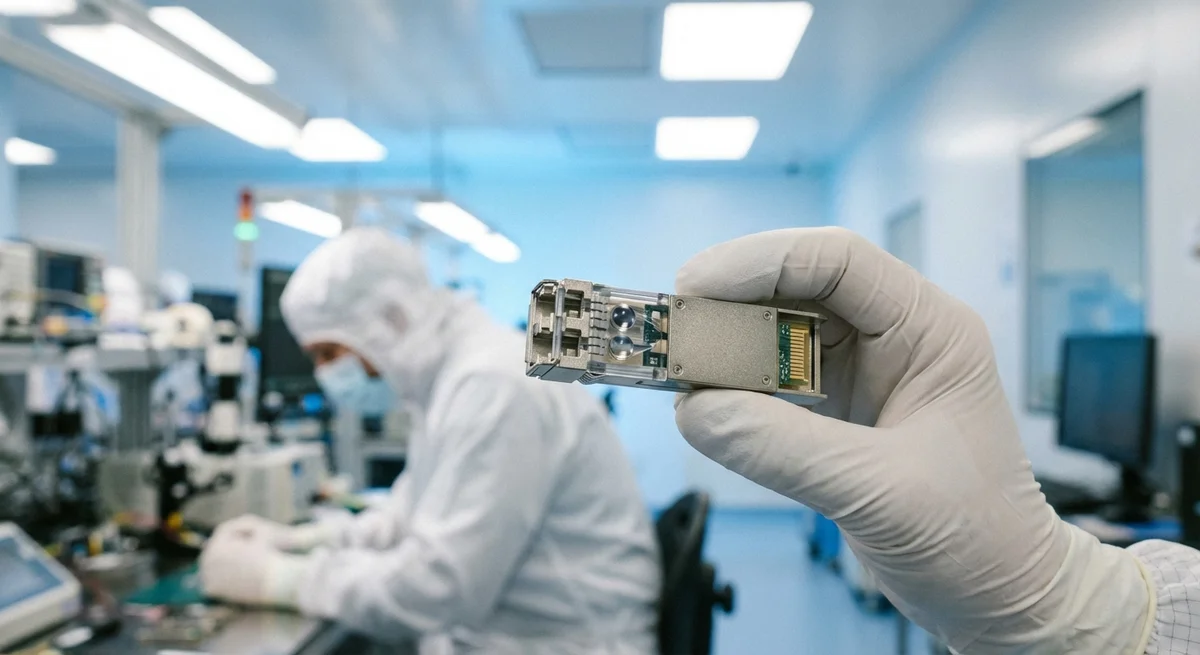
SpaceX veterans raise $50 million for optical networking for AI
As AI compute power grows exponentially, network bandwidth is becoming a critical question. A team of engineers who previously worked on ambitious projects at SpaceX founded the startup Mesh and raised $50 million in a Series A funding round. The money will go toward developing and mass-producing high-performance optical transceivers, designed to solve one of the key problems of modern data centers that run AI workloads.
The context: AI's rapid growth
The past few years have brought a real boom in artificial intelligence, especially in large language models (LLMs). Training these models takes enormous computing resources, including thousands of graphics processors (GPUs) working in unison. But existing data center network infrastructure often cannot cope with the volume of data that has to move between those GPUs. The bandwidth shortage becomes a bottleneck that slows training and limits scaling. This is the problem Mesh aims to solve.
A closer look at Mesh's solution
Mesh focuses on building optical transceivers: devices that convert electrical signals into optical ones and back, allowing data to travel over fiber at high speeds. What sets Mesh's products apart, according to the company, is unprecedented bandwidth and low latency, both critical for synchronizing the thousands of GPUs involved in training AI models. The company offers a scalable solution that efficiently joins a large number of compute nodes into a single high-performance network. This means AI developers will be able to build larger and more complex models and train them faster, which directly affects the pace of innovation in the field.
What it means for the industry
The $50 million investment will allow Mesh to move to mass production of its components. That could significantly affect the whole AI ecosystem. Keeping compute clusters running without interruption and removing network constraints will open new horizons for researchers and developers. AI companies will be able to build more powerful and efficient infrastructure, which will lead to better AI systems capable of tackling tasks that once seemed impossible. Mesh's success may also spur further innovation in data center networking, since demand for high-performance solutions will only keep growing.
Conclusion
Mesh's story is a clear example of how experience gained at leading technology companies can be applied to current industry problems. The sizable investment points to the company's strong potential and to investors' belief in its ability to reshape the AI data center landscape. As the need for AI computing power keeps growing, solutions like Mesh's will become an integral part of future infrastructure, providing the speed and scalability the next generation of AI innovation requires.
Ship AI Faster with Founders, Engineers & Weekly Architecture Reviews
Inside Vibe Club (hamidun.com/club) — weekly live masterminds with Zhemal Khamidun, Tech Radar, full LMS access, and 370+ production Claude Code skills.
The AI world, distilled — once a week
Seven stories that actually mattered, hand-picked. No noise, no reposts, no press releases.
Done! Check your inbox for a confirmation.