OpenAI goes shopping, Anthropic hides a model — the AI gap between insiders and everyone else keeps widening
The gap between people who understand AI and everyone else is turning into a chasm. OpenAI is buying up everything from financial apps to talk shows. Anthropic has built a model it considers too dangerous for a public release. And new jargon, like "tokenmaxxing," is arriving faster than most people can work out what is going on. The divide shows up in spending, in distrust, and even in vocabulary: the people at the center of the AI industry already speak a language most others do not understand.
AI-processed from TechCrunch; edited by Hamidun News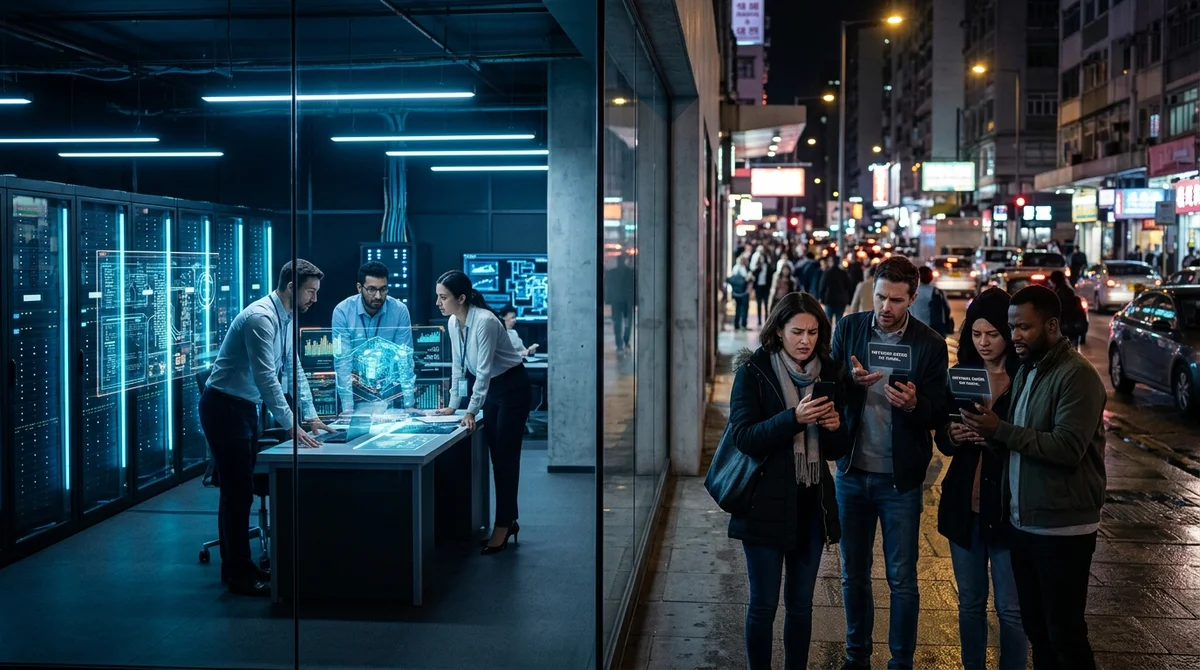
The gap between AI insiders and everyone else is quickly turning into a chasm. You can see it in spending, in distrust, and even in vocabulary: people at the center of the AI industry already speak a language most others do not understand.
OpenAI has switched to aggressive shopping mode. The company is steadily acquiring assets far outside its original field: financial apps, entertainment content, media projects. The purchases look disparate, but there is a logic behind them: building an ecosystem in which OpenAI's AI infrastructure becomes the invisible foundation of several industries at once. The company is building not a product but an infrastructure layer.
At the same time, a telling rebranding episode is unfolding: a well-known shoemaker has announced it is relaunching itself as an AI infrastructure company. This is not a one-off oddity but a symptom. The word "AI" in a pitch deck or press release works today the way "internet" did in the late 1990s or "blockchain" did in 2017. Any company that adds the label gets an instant revaluation, regardless of what is actually behind it.
Anthropic, meanwhile, has taken an unusual step: the company publicly acknowledged that it has developed a model it considers too powerful for an open release. That is rare in an industry where competing over public demos has become the norm. What exactly makes the model "too powerful" has not been disclosed. But the statement itself points to a shift: inside the labs, there is growing awareness that some capabilities require a different governance regime, not just a scheduled release.
Against this backdrop, analysts are starting to talk about what they call the AI Anxiety Gap: a divide in anxiety and understanding between those who work with AI from the inside and the broader public. Insiders operate with new concepts such as "tokenmaxxing" (squeezing the maximum out of a model's context window) and discuss architectural trade-offs and safety thresholds. Outside, there is a growing mix of admiration, skepticism, and a sense that the train has already left the station.
This gap is neither accidental nor temporary. It is structural. The pace of change in the AI industry outstrips the speed at which society can build a shared language to discuss what is happening. OpenAI's acquisitions, Anthropic's hidden models, and shoe companies rebranding as AI players are all symptoms of one process: the AI industry already lives in the next decade, while most people are still making sense of the current one.
- Nov 2, 2026Arca gives AI agents finance tasks lasting up to 10 days, but leaves the trades to humans
- Nov 2, 2026Meta's Muse assistant keeps dossiers on loved ones and gets root on Ubuntu by default
- Nov 1, 2026Local models lose to Opus and Codex: 0.21 on a MacBook versus 1.00 for Codex
- Nov 1, 2026Kimi scores 96.2% on a 1C database analytics test and emerges as a fallback if Claude access is blocked
Ship AI Faster with Founders, Engineers & Weekly Architecture Reviews
Inside Vibe Club (hamidun.com/club) — weekly live masterminds with Zhemal Khamidun, Tech Radar, full LMS access, and 370+ production Claude Code skills.
The AI world, distilled — once a week
Seven stories that actually mattered, hand-picked. No noise, no reposts, no press releases.
Done! Check your inbox for a confirmation.