TikTok in Mexico draws criticism over AI videos romanticizing the DFS secret police
A TikTok trend is gaining traction in Mexico: teenagers use AI to turn themselves into agents of the DFS, the secret police of the 1970s. For part of the audience, it's just another viral format. Critics see something more dangerous: the romanticization of an agency tied to torture, killings, and disappearances during the "Dirty War." The debate has intensified because these videos present a symbol of repression as a striking image of power and impunity.
AI-processed from Guardian; edited by Hamidun News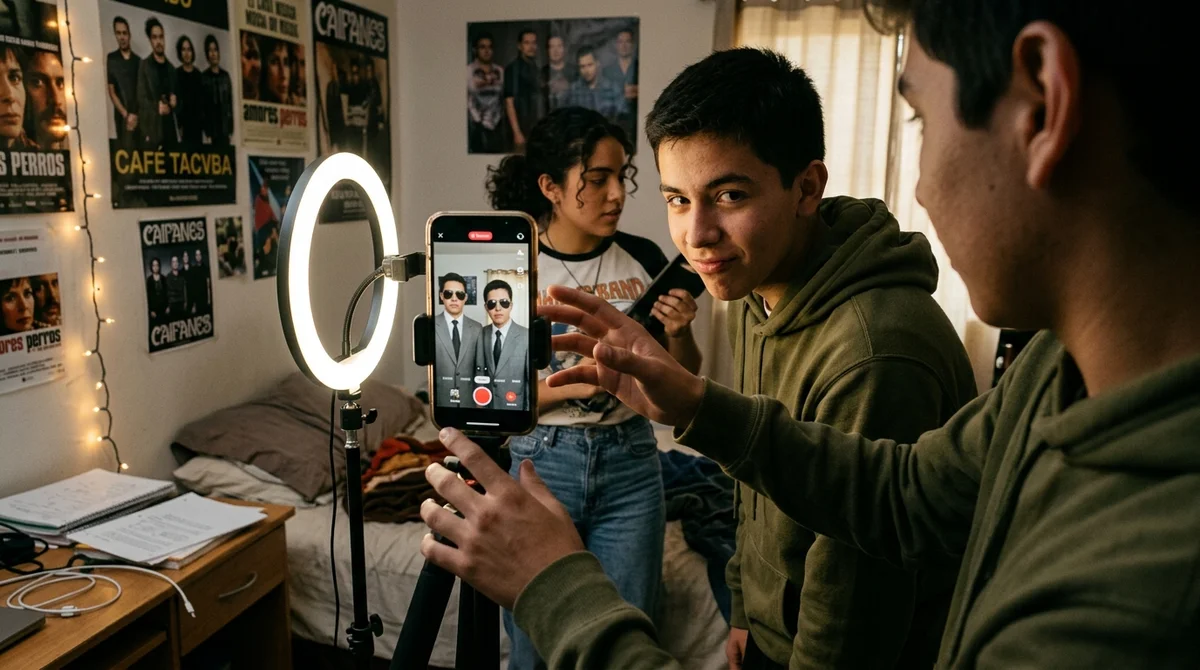
A TikTok trend is gaining momentum in Mexico: teenagers and young users are using AI to turn themselves into agents of the DFS, the secret police of the 1970s. To some, it's just another viral format. To others, it's a dangerous romanticization of an agency tied to torture, killings, and disappearances during the "Dirty War."
How the trend works
The videos follow a simple formula. A user uploads a photo or a short clip, and an AI service fills in the look of a DFS officer: retro suit, dark sunglasses, an official bearing, and a deliberately confident swagger. The result turns a historical instrument of repression into an aestheticized character for short vertical video. That ease is exactly what makes the trend so visible. You don't need to know the context to join in; you just copy the visual template and post the clip to your feed.
The problem is that in Mexico's collective memory, the DFS isn't just "an agency from the past." During the so-called "Dirty War," its officers were linked to the persecution of opponents, illegal detentions, disappearances, and the killings of thousands of people. So when that image returns as a trendy AI filter, part of the audience doesn't see historical stylization. They see an attempt to make a symbol of impunity look cool. That's what drives the current wave of criticism on the platform itself.
Why it's troubling
The fight over these videos isn't only about taste. It's about how social media reshapes attitudes toward traumatic history when any dark story can become a recognizable meme in a couple of clicks. That hits especially hard in a country where state violence and disappearances remain part of the public conversation, not a distant chapter in a school textbook.
Critics point to several problems at once:
- AI blurs the line between historical reconstruction and entertainment
- The viral format rewards shock content and shallow imitation
- The DFS image is presented as a style of power, not as a symbol of repression
- Young audiences encounter the subject without the necessary context
The phrase "absolute impunity" keeps coming up in the discussions. According to the trend's opponents, that is precisely what ends up being glamorized. The point isn't that young people shouldn't engage with history through new tools. The real question is what the platform makes visible: an examination of the past, or its attractive packaging. When algorithms reward attention for strong visual impact, those two easily trade places.
History as a mask
Here, AI isn't just a technical tool. It accelerates the distance between an event and its image. What once required a costume, a shoot, and at least a basic knowledge of the era now assembles itself automatically from a couple of frames and a short prompt. As a result, users don't try on a specific historical context; they try on a ready-made role: confident, dangerous, powerful. That mechanic works well for short video, but it does a poor job of conveying that real state crimes stood behind the image, along with the trauma of families who are still searching for answers.
That's why the reaction to the trend has been so sharp. For some viewers, this isn't an innocent game with retro aesthetics but a symptom of a broader problem: platforms can quickly repackage even the darkest chapters of the past into appealing content. The easier AI makes that packaging, the more the debate shifts from the technology to responsibility, whether of the user, the service, or the recommendation feed itself. History doesn't vanish from the frame, but it becomes set dressing, where the moral weight of the events gives way to visual effect.
What it means
The DFS episode shows that generative AI already affects not only work and creativity but also public memory. When a few clicks can turn a repressive apparatus into a viral image, the debate inevitably extends beyond TikTok. For platforms, it's a signal that questions of moderation and context will increasingly involve not just fakes, but how AI repackages real historical trauma.
- Nov 2, 2026Karpathy builds a YouTube clone with 6454 videos from Hacker News recommendations in two hours
- Nov 2, 2026Karpathy used Claude to build HackerTube from 6,454 videos recommended on Hacker News
- Nov 2, 2026The Verge reviewer builds a $50 Meta Muse Charm alternative with Claude Code
- Nov 2, 20268 Skills for video in Claude Code: from 244 pixel effects to rough-cut editing
Key Questions Answered
How the trend works?
The videos follow a simple formula. A user uploads a photo or a short clip, and an AI service fills in the look of a DFS officer: retro suit, dark sunglasses, an official bearing, and a deliberately confident swagger. The result turns a historical instrument of repression into an aestheticized character for short vertical video. That ease is exactly what makes the trend so visible. You don't need to know the context to join in; you just copy the visual template and post the clip to your feed. The problem is that in Mexico's collective memory, the DFS isn't just "an agency f
Why it's troubling?
The fight over these videos isn't only about taste. It's about how social media reshapes attitudes toward traumatic history when any dark story can become a recognizable meme in a couple of clicks. That hits especially hard in a country where state violence and disappearances remain part of the public conversation, not a distant chapter in a school textbook. Critics point to several problems at once: AI blurs the line between historical reconstruction and entertainment The viral format rewards shock content and shallow imitation The DFS image is presented as a style of powe
What are the key details on History as a mask?
Here, AI isn't just a technical tool. It accelerates the distance between an event and its image. What once required a costume, a shoot, and at least a basic knowledge of the era now assembles itself automatically from a couple of frames and a short prompt. As a result, users don't try on a specific historical context; they try on a ready-made role: confident, dangerous, powerful. That mechanic works well for short video, but it does a poor job of conveying that real state crimes stood behind the image, along with the trauma of families who are still searching for answers.
Test Frontier LLMs & Autonomous Agents in One Workspace
Run Claude Opus 5.5, GPT-6, Gemini 3.1, and DeepSeek side-by-side in Nomad AI (nomadnet.ai) — unified model routing, deep research, and multimodal workflows under one subscription.
The AI world, distilled — once a week
Seven stories that actually mattered, hand-picked. No noise, no reposts, no press releases.
Done! Check your inbox for a confirmation.