Habr AI
AI news source. Articles are auto-selected and adapted by Hamidun News editors.
Latest publications

Fintech team launched an AI chatbot: concepts, pitfalls, and lessons from implementing GenAI
Developers at a fintech company described the path from early experiments to the production launch of a generative chatbot — and the concepts and challenges the team encountered.

AI agent for job hunting on hh.ru: vacancy monitoring and analysis in Telegram
A developer built an AI agent that monitors hh.ru on a schedule, selects relevant vacancies, and sends initial analysis to a personal chat.

Tesla hasn't run autonomous tests in California for six years, yet promises swift robotaxi launch
Tesla conducted zero autonomous test miles in California in 2025 despite Elon Musk's promise of rapid robotaxi deployment: regulators await not permits but actual company data.

SimpleOne explained why AI speeds up development but worsens code quality
The SimpleOne team described the downside of AI-assisted development: prototypes appear faster, but without architectural rules, metrics, and reviews, generated code quickly becomes a source of technical debt.

ChatGPT and Google are changing education: will AI replace tutors and teachers
ChatGPT, Photomath and Socratic are turning the AI tutor into a mass-market product, but along with convenient explanations and low-cost access they bring cheating, errors and a debate over the role of the human teacher.

2people IT CTO explained where AI in business really pays off and where companies lose money
2people IT CTO broke down which AI implementation scenarios deliver economic impact fastest—OCR, support, internal assistants, and routine IT tasks—and why process chaos kills ROI.

Habr AI: a meta-model for diagnosing neural network training detects failures from learning curves
Habr AI described a meta-classifier that uses learning curves and basic metrics to detect underfitting, overfitting, and data shift so training can be stopped earlier.

Larian and Microsoft at the center of the dispute: how neural networks are changing game development
Debates around AI in game development intensified following the cases involving The Alters, Larian, and Expedition 33, but studios use neural networks primarily for localization, prototypes, and routine tasks.

MTS Exolve showed how to automate deal data entry in Bitrix24 with YandexGPT
MTS Exolve broke down an MVP service in Python that, after a call, receives a transcript, extracts BANT fields via YandexGPT, and automatically updates an existing deal in Bitrix24.

ChatGPT helped set up a YouTube stream, but first made OBS harder to work with
The author wanted to quickly build an information banner for a YouTube stream in OBS, but ChatGPT sent him down a long path and only later suggested a more practical solution through an HTML overlay.

Vibe coding under the microscope: what static analysis finds in AI projects
PVS-Studio has begun systematically checking the code of “revolutionary” projects written using vibe coding — the first static analysis findings are predictable, but telling.

'Anna' is being developed on OpenClaw — an AI assistant for Windows with Telegram and email
The creator of the 'Anna' project showed an MVP of an AI assistant for Windows: an app with clear onboarding, Telegram, email, and background tasks for everyday users.
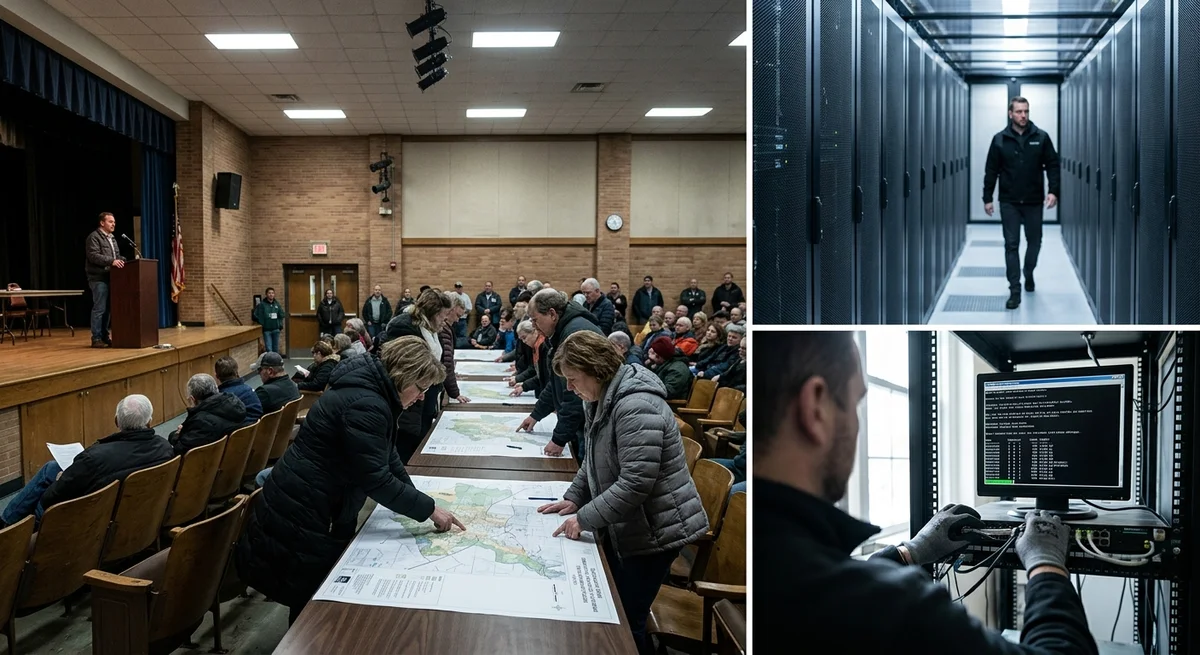
Project Gravity and the AI boom: how data centers divided Archbald, Pennsylvania
In the Pennsylvania town of Archbald, six AI data center campuses promise tax revenue and investment, but are already leading to evictions and disputes over water, noise, and electricity bills.
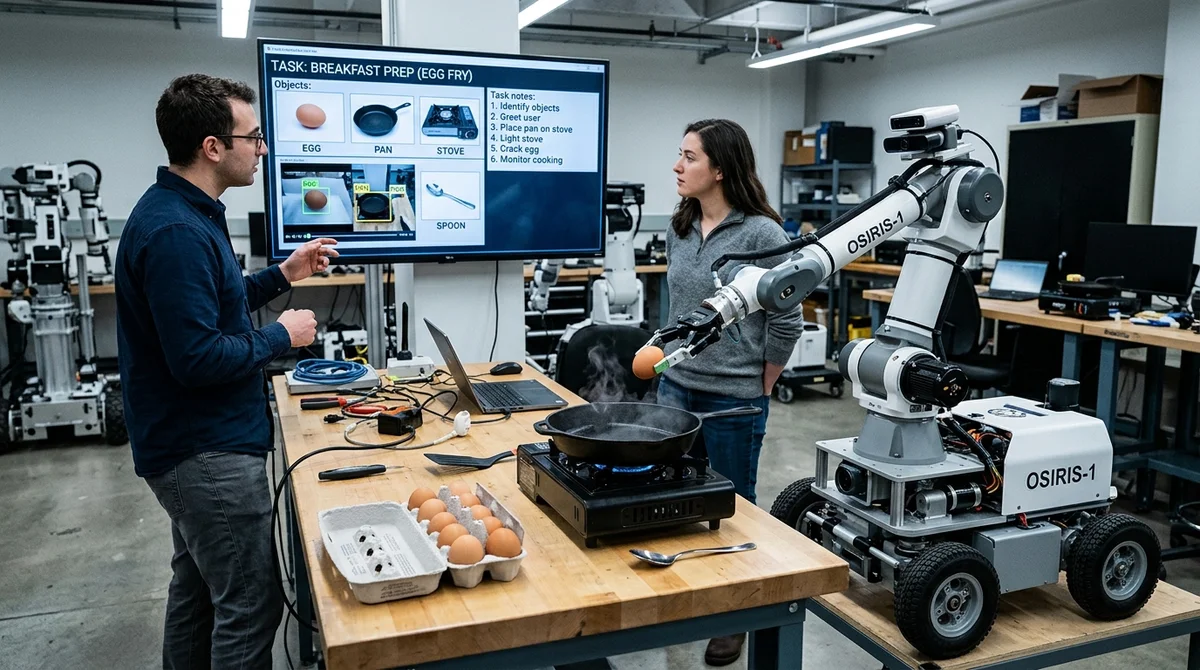
Habr AI: ontologies could become memory for LLMs, robots, and enterprise assistants
Habr AI explains why the next step after RAG should be ontological memory: it helps LLMs retain context, strengthens local models, and makes robots more useful.

Why Microsoft and Alphabet Are Driving Up Global Demand for Copper and Aluminum for AI
The boom in AI data centers and the expansion of power grids are sharply increasing demand for copper and aluminum: tech giants are investing hundreds of billions, while mining and processing cannot keep up with the pace

Qt and a neural network: how a developer built an app in Visual Studio with almost no hand-written code
A developer built a desktop app in Qt and C++ for recording binaural audio, delegating almost all routine code to AI and leaving task-setting, builds, and verification to himself.

Qwen 3.5-Plus Presented as a Tool for Step-by-Step Prompts and Routine Automation
Using Qwen 3.5-Plus as an example, the author explained how to build prompts for routine tasks: assign a role, split the process into steps, and tightly maintain the model's working context.

OTUS compiled a practical guide to implementing AI: from ML and NLP to RAG, MLOps, and architecture
OTUS released a practical digest on implementing AI at work: one overview brings together materials and courses on ML, NLP, RAG, MLOps, and architecture for teams that need a practical roadmap.

TAPe introduces a compact object detector as an alternative to YOLO for custom tasks
The TAPe team presented a pilot object detector on COCO-like data: the 115K-parameter model trains on CPU, supports custom classes, and outperforms YOLO11s in early tests.

MTS Web Services: AI Has Not Caused Mass Unemployment, but It Is Changing Hiring Rules
MTS Web Services examined AI's impact on the labor market and concluded that there is no mass unemployment so far, but demands for employee adaptability will rise faster.

Habr AI explained why social media users react so strongly to AI-written texts
The Habr AI author links irritation with AI posts not to the quality of the text itself, but to the fact that generative content finally breaks the already fragile meaning of social media.

Epotos implemented local AI for claims and moved complaints to Bitrix24
Fire suppression systems manufacturer Epotos automated customer claims processing: a local Tesseract, Qwen, and Bitrix24 stack reads emails and attachments.

Paperclip turns a swarm of AI agents into a manageable “one-person company”
The open-source Paperclip framework lets solo founders manage a staff of AI agents like a company: hire agents into roles, assign tasks, track deadlines, and stay within budget.

Dani Shcherbakov's startup cut voice-agent pauses to 0.3 seconds and scaled to 1 million calls a month
Dani Shcherbakov's team built voice AI agents for businesses: they respond with less than 0.3 seconds of latency, scale to 1 million calls a month, and improve conversion.

Rerayt-Zavod showed the limit of AI rewriting: rules can be transferred, editorial voice cannot
The Rerayt-Zavod team showed that AI is already fairly good at copying a text’s structure and formal rules, but still cannot reliably reproduce the voice of a specific media outlet.

Why OpenAI and other AI market leaders keep spending billions without fear of collapse
A column on the LLM boom offers a simple explanation: the biggest AI companies are investing billions not for immediate returns, but to make turning to chatbots part of how users live and communicate.

Agentic SOC in 2026: how AI agents accelerate cyber defense and where autonomy becomes dangerous
Agentic SOC shifts security monitoring from manual routine to semi-autonomous agents, but the speed comes with risks of mistaken isolation, matching errors, and prompt injection.

LILA creator presented a compact AI architecture and challenged Sam Altman's approach
The creator of the Sovereign-Lila-Leech project released the LILA manifesto and said the geometry of the Leech lattice would help compress language models further and run them offline on mobile devices.

Habr examines how natural intelligence differs from artificial intelligence and where the boundary lies
Habr suggests looking at intelligence more broadly than human definitions: as the ability to understand, learn, and predict — and using these criteria to compare animals and AI.

Aurora project author discusses memory and the architecture of a digital personality with Anthropic's Claude
The author of the Aurora project described a late-night conversation with Claude about AI memory, identity, and the architecture of a digital entity that should not play a role, but preserve continuity of experience.